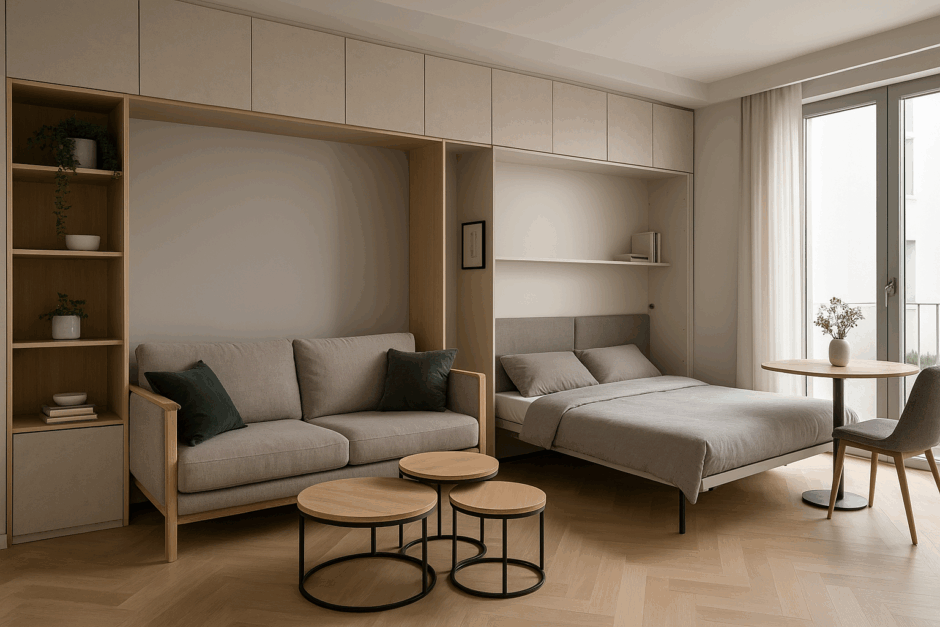
Multifunctional furniture in a compact European apartment featuring a sofa bed, modular shelving, and a lofted sleeping area maximizing vertical space.

Best Multifunctional Furniture for Tiny Homes

Living in a tiny home or any small space means every square foot counts. The right furniture can transform a cramped area into a comfortable, efficient living space by serving multiple functions at once. From beds that fold into desks to tables that expand for dinner and collapse afterward. Multifunctional pieces are the key to maximizing limited space. 

Below are some of the best multifunctional furniture ideas for tiny homes to help you live large in a small footprint:

  1. Murphy Bed with Desk – A bed that folds up into the wall, often revealing a fold-down desk or table. This classic space-saver turns your bedroom into an office or living area by day.
  2. Convertible Sofa Bed – A stylish couch by day that pulls out or folds down into a bed at night. Ideal for hosting guests without a dedicated guest room.
  3. Drop-Leaf or Expandable Table – A dining or work table that can compact to a smaller size (or fold flat against a wall) when not in use. Then extend when you need more surface area.
  4. Storage Ottoman or Bench – Seating that doubles as hidden storage, perfect for stashing away blankets, books, or other items. For example, an ottoman can be a footrest, coffee table, and a storage box all in one.
  5. Modular Shelving Units – Adjustable shelves or cabinets that can reconfigure into different shapes as needed. Even forming room dividers or desks. Many modular systems include fold-out tables or built-in desks for extra functionality.

These multifunctional pieces illustrate how clever design can make small interiors remarkably livable. In the sections below, we explore why such furniture is essential and highlight popular space-saving solutions across different regions. From the United States to Europe, Japan, and Australia.

Multifunctional Furniture For Tiny Homes (FAQ)

What should I look for when buying multifunctional furniture for a tiny home?

First, measure your space carefully. Look for pieces that fit the scale of your rooms (compact dimensions) and genuinely serve more than one purpose. High-quality hinges, durable materials, and easy conversion mechanisms are important. You want a sofa bed or folding table that one person can convert quickly. Prioritize items with built-in storage (like beds with drawers or coffee tables with shelves) to get extra value.
Also consider flexibility. Modular or wheeled furniture can be reconfigured or moved as needed, which is a big plus in a tiny home.
Reading customer reviews or watching demonstration videos can help ensure the piece is sturdy and functional in practice.
Finally, don’t forget to choose a style that complements your decor so that the item can blend into your space whether it’s being used in one mode or another.

How can I make a studio apartment feel like it has separate rooms?

Multifunctional furniture and clever layout tricks can create the impression of distinct “zones” in a studio. One popular approach is to use a room divider that doubles as furniture
For example, a bookshelf or a folding screen to separate the sleeping area from the living area. A sofa can also act as a divider between your “living room” and “bedroom.” Look for a Murphy bed or wall bed, which you can hide away during the day to reclaim space. 
Rugs and lighting also help delineate areas. A pendant light over a small dining table defines the dining spot, while a floor lamp and rug in front of the sofa mark the lounge. Even in one open room. Arranging these zones thoughtfully, and using versatile furniture. This will make your studio feel like it has multiple rooms with different functions.

Is custom-built furniture worth it for small spaces, or can I rely on ready-made pieces?

It depends on your budget and how unique your space requirements are. Ready-made multifunctional furniture has come a long way. There are many affordable, quality pieces (from big-box retailers to specialty brands) designed for small spaces. These can often meet your needs without the higher cost of custom work. However, in very tight or irregular spaces, custom-built furniture can be a game-changer. 
Built-ins or bespoke pieces can use every inch perfectly. They also let you choose the materials and finishes to match your style. The downside is cost and time. Custom work is usually more expensive and you’ll have to wait for design and installation. 
A middle ground some people use is hacking or modifying ready-made furniture. For instance, buying modular units and adding custom trim, or combining off-the-shelf components in a custom configuration. 
In summary, you can absolutely create a great tiny home with off-the-shelf furniture. For certain situations (like a very small kitchen or an under-stair nook) a custom solution might be worth the investment.

How do I maximize storage in a tiny home without making it feel cluttered?

The key is to integrate storage into other elements of the home so it’s not all visible. Use multifunctional furniture with hidden storage to tuck away items out of sight. Make use of vertical space. Install shelves or cabinets up high. Consider hanging storage like pegboards or over-the-door organizers for things like shoes, pots and pans, or toiletries. 
In a tiny home, every niche can become storage. Steps, window sills, the space under a built-in bench. However, keep the visible areas as open as possible. 
For instance, choose a few closed cabinets rather than open shelving so that clutter is behind doors. Maintaining a cohesive look (matching baskets or boxes) for any exposed storage helps it look tidy. 
Regularly curating what you own is also important; in a small space, adopting a “one in, one out” rule for belongings can prevent clutter buildup. 
By thoughtfully designing storage into your space, you’ll have a place for everything while keeping the overall vibe clean and airy.

Where can I find multifunctional furniture or space-saving ideas?

There are many resources to find great multifunctional pieces. Big retailers like IKEA, Target, and Wayfair have sections or filters for small-space furniture. They offer everything from wall-mounted drop-leaf tables to compact sofa beds at various price points. 
Specialty companies such as Resource Furniture or Clei (for high-end transforming furniture) showcase what’s possible if you’re willing to invest. 
Online, you can browse communities and videos for inspiration. YouTube channels and Pinterest boards on “tiny homes” or “small space living” often feature ingenious furniture ideas (e.g., hidden compartments, DIY folding desks). 
Visiting local furniture stores or home shows can also let you test out pieces in person. 
And don’t overlook custom local craftsmen or DIY plans if you have a very specific need. The tiny house movement has spurred many woodworkers and builders to create custom solutions.
Lastly, check out blogs and magazines like Apartment Therapy, Dwell or Small Space Interiors which regularly highlight clever furniture designs and where to source them. 
By exploring these outlets, you’ll discover a wide range of products that can help transform your small home. From budget-friendly finds to splurge-worthy designer pieces.

Why Tiny Homes Need Multifunctional Furniture

Tiny homes and micro-apartments come with unique challenges: minimal floor area, less storage, and often just one or two rooms to fulfill all your needs. Multifunctional furniture is essential in these spaces for several reasons:

  • Maximizing Space: Each piece often replaces two or three separate furniture items, cutting clutter and freeing up room to move. For instance, a loft bed that sits above a desk or sofa creates usable space below, and a wall-mounted table that folds away leaves the floor clear when the table isn’t needed.
  • Enhancing Versatility: Furniture that serves multiple purposes allows one area to flex for different activities. Your living room can turn into a bedroom or office simply by converting furniture arrangements. Versatile pieces adapt to your daily routine without requiring additional square footage.. Whether that’s working from home, entertaining, or relaxing.
  • Improving Organization: Many multi-use designs come with built-in storage (drawers, shelves, compartments), helping corral the chaos. By hiding storage within furniture. Like a bed with drawers underneath or a coffee table with shelves. Tiny home dwellers can keep belongings tidy and out of sight, making the space feel open and calm
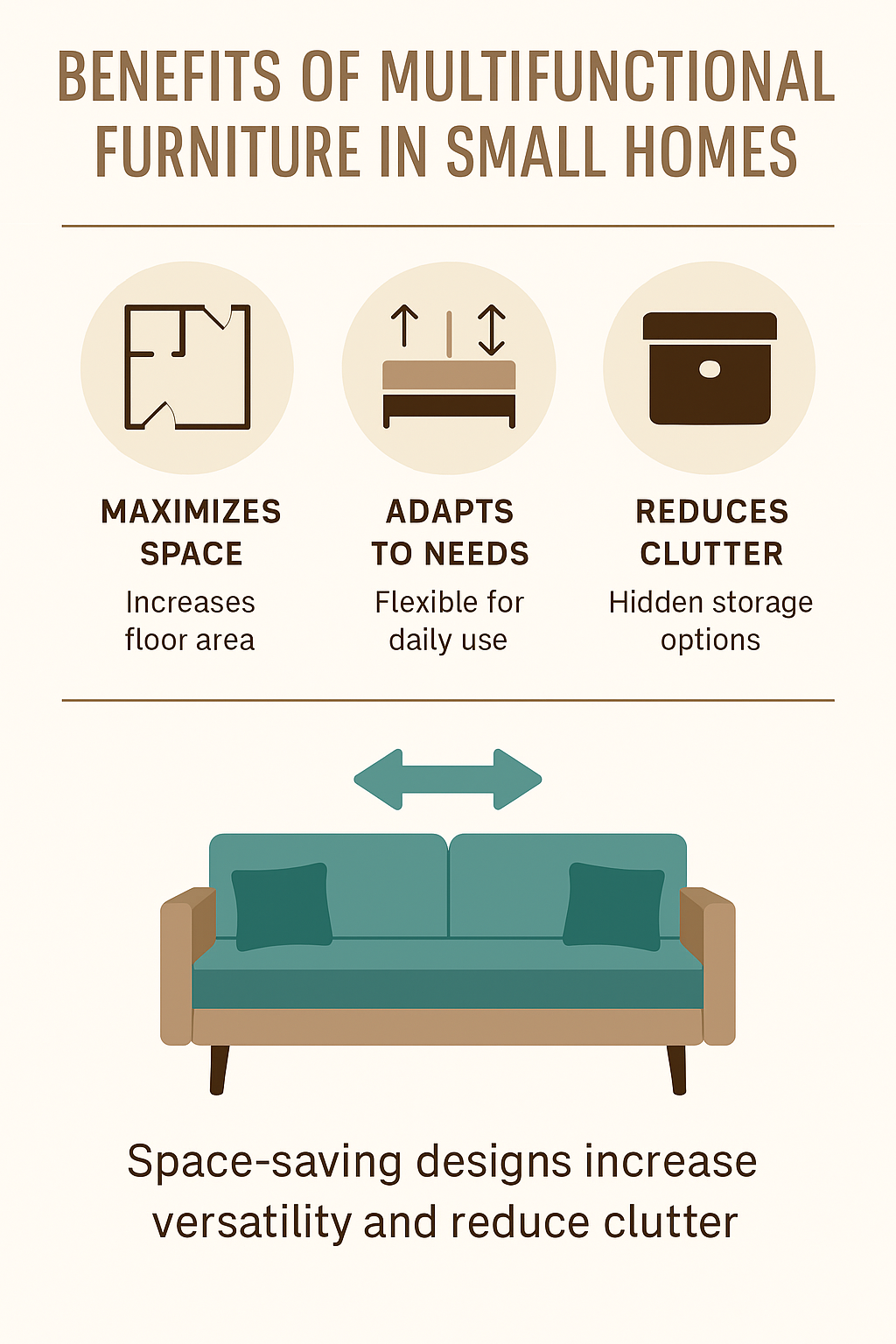
multifunctional furniture infographic

Multifunctional furniture brings major benefits to small homes: it maximizes floor space, adapts to different needs throughout the day, and often incorporates hidden storage for a cleaner, more organized living area. This infographic highlights how space-saving designs increase versatility and reduce clutter in compact living spaces.

By embracing these benefits, you turn limited space into an advantage – a catalyst for creativity and intentional living. Now, let’s take a tour of how different parts of the world approach multifunctional furniture in small homes and see examples of space-saving innovations from each region.
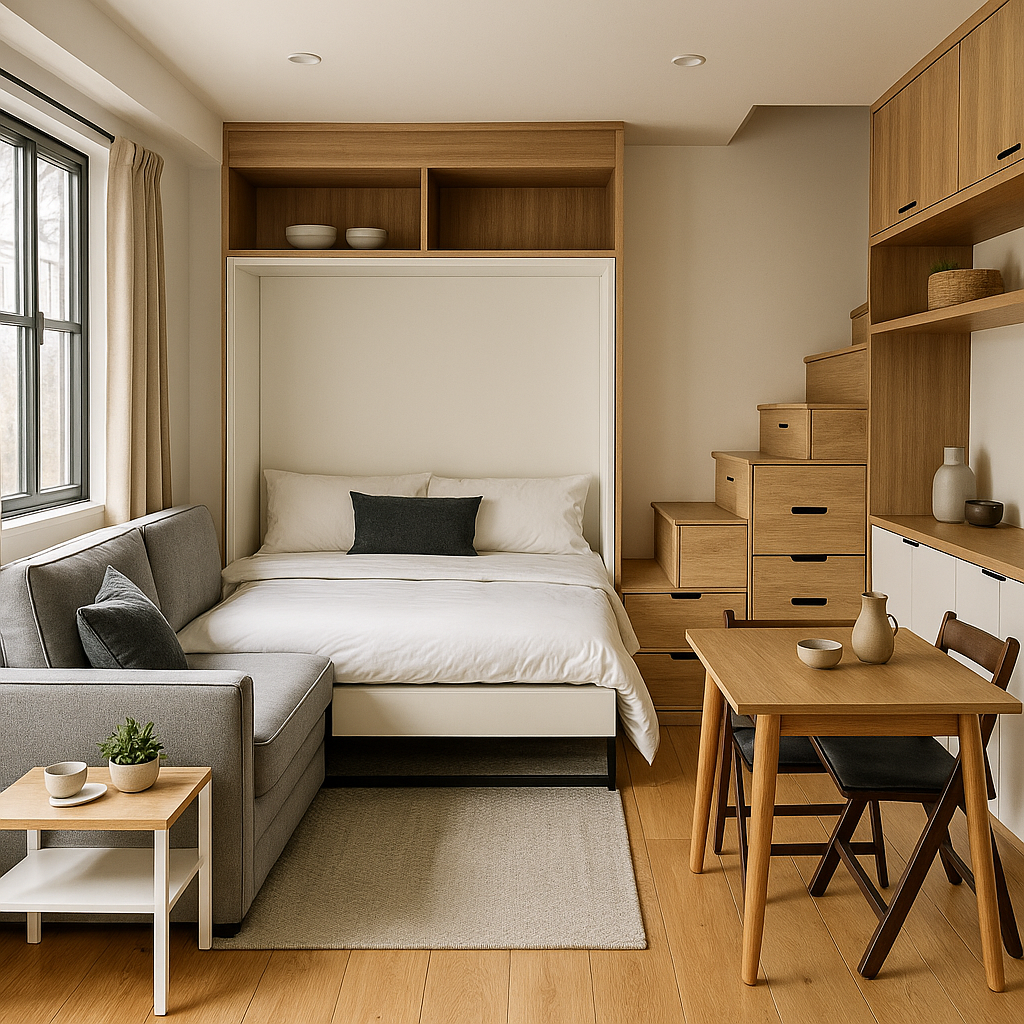
Multifunctional furniture in a compact American tiny home, featuring a Murphy bed with desk, loft storage, and convertible sofa for space-saving design.

America: Tiny House Movement & Space-Saving Staples

The United States has seen a booming interest in tiny homes over the past decade. In fact, a recent survey found 86% of Americans would consider living in a tiny home, citing affordability and simplicity as big draws. 

The resulting tiny house movement (which advocates living in homes often under 400 square feet) has fueled demand for innovative, space-saving furniture. American tiny house owners and small-space dwellers have popularized several multifunctional staples:

  • Murphy Beds and Loft Beds: The classic Murphy bed has made a comeback in tiny houses and studio apartments. It folds up vertically into a wall cabinet when not in use, instantly freeing up floor space for daytime living. Modern Murphy beds often include built-in desks or sofas on the flip side. So one piece of furniture serves as both bedroom and office. Loft beds are another favorite. By elevating the bed, the area below becomes usable for a desk, seating, or storage. Effectively doubling the function of the same square footage.
  • Sleeper Sofas and Sectionals: Americans love their living room lounges, so the sofa bed has become a tiny-home hero. A convertible sofa or futon provides comfortable seating by day and quickly transforms into a bed at night. Sectional sofas with detachable ottomans or chaise pieces offer hidden storage and flexible arrangements. You can reconfigure or tuck away sections as needed. This multi-purpose approach is great for studio apartments or one-room tiny homes that need to serve as living room and bedroom in one.
  • Expandable Dining Tables: In many American tiny houses, you’ll find drop-leaf tables or pull-out dining tables that tuck into kitchen counters. These tables can often seat 4+ people when extended for meals or projects. Then fold down to a small console or completely disappear when not in use. Paired with stackable or folding chairs An expandable table ensures you’re ready for dinner guests or workspace. Without permanently sacrificing precious floor space.
  • Storage-Integrated Furniture: From ottomans that hide board games and extra linens. To stairs with built-in drawers, U.S. tiny home designs frequently incorporate sneaky storage. For example, the steps up to a sleeping loft might each be a hinged lid or drawer for clothes and shoes. Coffee tables come with shelving or lift-tops to store items inside. This trend reflects a general principle in American tiny living. Every piece should pull its weight by offering storage or dual uses.
  • Custom Built-Ins: Many U.S. tiny houses feature custom-built furniture that’s tailored to the exact dimensions of the space. Think of a built-in desk that folds out from a wall shelf or a window seat nook that doubles as a dresser. These bespoke solutions maximize every inch. While custom work can be pricey, it’s often worth it for the seamless functionality. Many DIY enthusiasts build their own. Brands and DIY shows in the U.S. often showcase transforming furniture inspiring homeowners to get creative with multipurpose design. From staircase drawers to beds that slide on tracks.

American small-space dwellers also benefit from a growing market of ready-made multifunctional furnishings. Major retailers offer space-saving furniture lines. Specialty companies like Resource Furniture bring European-designed transforming furniture (like Italian wall-bed systems) to U.S. customers. In short, the U.S. approach to tiny home furniture is a mix of reviving time-tested solutions (Murphy beds). Integrating technology and modern design, and prioritizing flexibility for the user. The result is that even a 300 sq ft tiny house can feel surprisingly comfortable and functional. Given the right furniture choices.
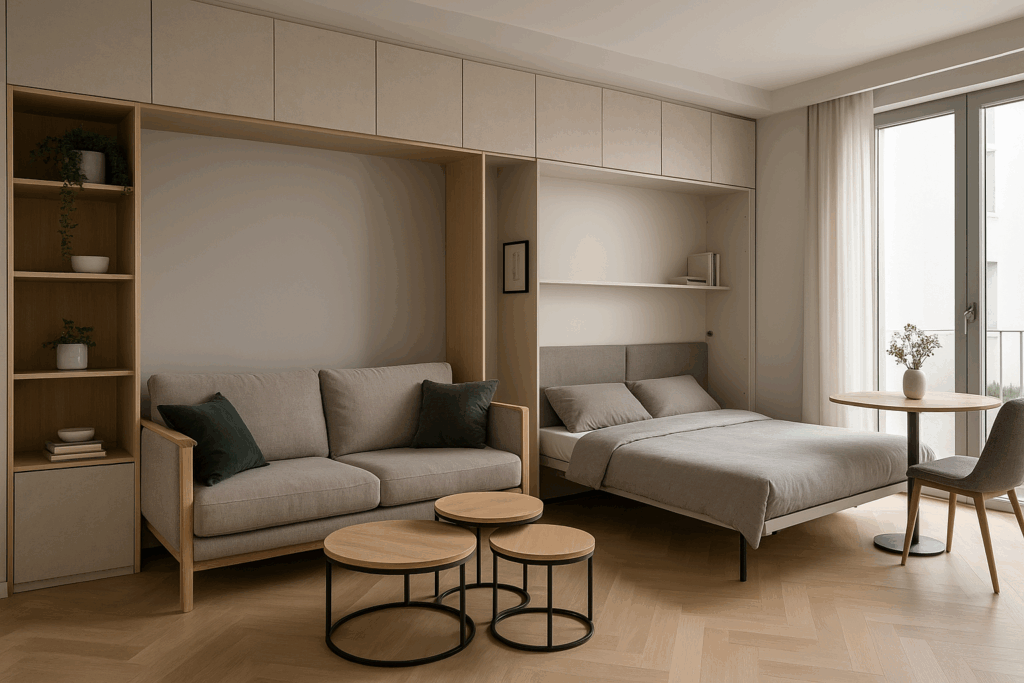
Multifunctional furniture in a compact European apartment featuring a sofa bed, modular shelving, and a lofted sleeping area maximizing vertical space.

Europe: Smart Solutions for Small Apartment Living

Across Europe, living spaces have historically been smaller on average than in the U.S., especially in cities. European designers and homeowners have long mastered the art of compact, efficient living

It’s common for city apartments in places like Paris, London, or Berlin. To be well under 600 square feet, so multifunctional furniture is practically a necessity rather than a trend. Several European innovations and habits showcase how to make the most of limited space:

  • Sofa Beds and Futons as Everyday Furniture: Europeans have widely embraced sofa beds not just for guests, but as primary beds in studio flats. Likewise, the futon serves as a bed at night and a minimalist couch when rolled or folded up during the day. In many European studios, you’ll find a day-to-night living area where the bedding is neatly stored each morning to free up the lounge. This daily practice of converting furniture helps one small room serve multiple purposes without feeling like a bedroom all day.
  • Wall Beds and Modular Systems: High-quality transformable furniture systems are a hallmark of European design. For example, Italian manufacturers like Clei produce sleek wall-bed units that not only hide a bed behind cabinetry. But also integrate desks, shelving, or even a sofa on the front. These systems can turn a single room into a bedroom, office, and living room by rearranging the modular components. In urban apartments across Europe, you might see a dining table that slides under a raised platform or a bed that lifts up to reveal a workspace. Clever engineering that maximizes functionality.
  • Built-In Kitchenettes and Compact Appliances: European kitchens in small flats often use miniaturized appliances and built-ins that save space. Fridges, dishwashers, and washer/dryer combos are available in narrower widths than the American standard. Allowing them to tuck into cabinetry seamlessly. Multi-use kitchen furniture, like a rolling island cart that doubles as a dining table or wall-mounted drop-down breakfast table. Are common solutions. These pieces make the kitchen adapt to need Extend for meal prep or dining, collapse for moving around in a tight space.
  • Expandable and Nesting Furniture: European furniture brands have pioneered many nesting furniture designs. Nesting tables, a set of small tables that fit under one another. Are popular for providing extra surfaces for coffee or snacks when needed. Then consolidating into the footprint of one table. Expandable consoles are another European favorite, ideal for hosting dinner parties in a small flat. A console table by your entryway might extend into a 6-person dining table in minutes. All thanks to hidden leaves and support panels. Similarly, stackable chairs and stools are often kept on hand. You can stack and stow them in a corner, then bring them out for extra seating when friends visit.
  • Use of Vertical Space: Europe’s older buildings often have high ceilings, which has led to creative vertical solutions. In small apartments, you’ll frequently see mezzanine lofts or elevated platforms added to create sleeping areas or storage up high. Even if a full loft isn’t possible, tall wardrobes, overhead cabinets, and ceiling-mounted storage racks make use of vertical volume. For furniture, this might include bunk-bed-style arrangements for adults. For example, a loft bed with a sofa or desk below. Essentially combining three pieces: bed + couch + desk in one vertical stack. By capitalizing on height, European interiors manage to fit more functionality per square foot on the ground.
  • Modular Sofas and Sectionals: As with their American counterparts, Europeans enjoy modular sofas, but often on a smaller scale. Compact sectionals with movable ottomans or chaise pieces can be reconfigured to suit different occasions. A lounge setup for movie night, a more open arrangement for a party. Or even a guest bed by aligning sections together. European designs tend to emphasize slender profiles and lighter weight, making pieces easier to rearrange in tight quarters.

European interior design also leans toward minimalism and multi-use by tradition. In Scandinavian countries, there’s a concept of “lagom” which often translates into owning fewer, better items that serve many purposes. The influence of retailers like IKEA has spread affordable space-saving furniture worldwide. With staples like wall-mounted folding tables, sofa-beds, and storage stools appearing in homes from Amsterdam to Athens. In essence, Europe’s small-space solutions combine ingenious design with a lifestyle of making do with less. Proving that a well-furnished 500 sq ft flat can feel as rich and functional as a much larger home.
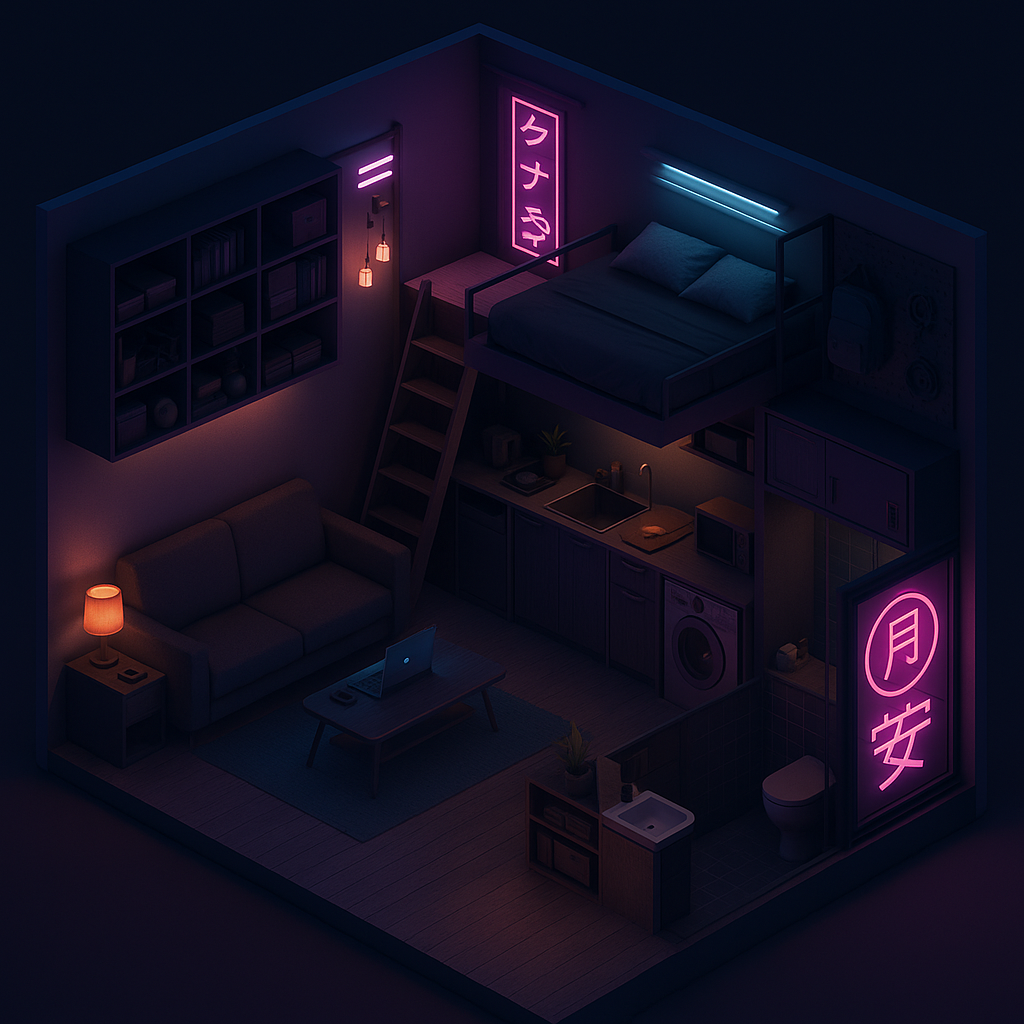
3D cyberpunk Japanese micro-apartment layout with multifunctional furniture, lofted sleeping area, modular kitchen, and foldable furniture maximizing space.

Japan: Innovative Designs for Micro Living

In Japan, especially in densely populated cities like Tokyo, compact living is a way of life. Japanese homes are typically modest in size, and single-room apartments can be extremely small. Sometimes well under 200 square feet. 

Over decades, Japan has developed a culture of ultra-efficient design where furniture and rooms themselves are flexible to accommodate different activities. Multifunctionality is deeply embedded in traditional Japanese living and modern innovations alike:

  • Futon Bedding and Transforming Rooms: A quintessential example is the Japanese futon. A lightweight, foldable mattress that is laid directly on the floor at night and stored away in a closet by day. This allows a bedroom to function as a living area or dining area once the futon is put away each morning. In a tiny Tokyo apartment, the same 8 tatami-mat rooms (about 140 square feet) might serve as living room, bedroom, and home office at different times of day simply by rolling up bedding and unfolding a low table. This practice reflects Japan’s traditional approach to multi-use spaces, where rooms are defined by their use rather than fixed furniture.
  • Multi-Purpose Modular Units: Japanese designers are known for modular, space-saving furniture units that often combine several functions. For instance, you’ll find chic modern pieces like a compact sofa that converts into a bunk bed. Or an all-in-one kitchen unit that includes a mini-fridge, stovetop, sink, and storage in what looks like a single cabinet. Providing sleeping space for two without a dedicated bedroom. Some cutting-edge designs in Japan include robotic furniture. Such as motorized moving walls or ceilings that can lower a bed down at night and lift it out of the way during the day. These concepts are now being adapted globally in luxury micro-apartments.
  • Foldable and Stowable Everything: If it can fold, flip, or tuck away, the Japanese have likely tried it in furniture. Folding dining tables and chairs are common in small homes. After use, they’re hung on a wall rack or slid under a bed. There are folding Japanese floor chairs with back support that can be easily stored when not needed for guests. Even bathtubs in some micro-apartments are designed to fold up or double as a countertop when covered. Although that’s more rare. This extreme commitment to stowable design means a tiny apartment can be cleared out to open floor space when needed. Then quickly re-equipped with furniture for meal times or sleeping. To do exercises or entertain, for example.
  • Vertical Utilization and Lofting: Much like Europe, Japan makes heavy use of vertical space. High ceilings are less common in older Japanese apartments, but newer micro-housing often incorporates lofted sleeping areas accessible by ladder. Even a very small footprint can have a loft for sleeping or storage, freeing the main level for other uses. Wall-mounted storage is ubiquitous. Shelves, pegboards, and hanging racks cover the walls in many homes to keep belongings off the floor. A trademark in Japan is the use of pegboard walls in kitchens and even living areas. Allowing residents to re-hang and rearrange storage for different items seasonally. For instance, hanging fans and fold-up guest bedding bags in the summer, coats and heaters in the winter.
  • Custom Joinery and Built-Ins: Japanese carpentry traditions have contributed to modern built-in solutions that are both beautiful and functional. Examples include genkan (entryway) shoe cabinets that hold an entire household’s footwear in a slim case. Or tatami platforms with integrated storage. Some studio apartments feature a raised tatami floor section under which drawers or even a trundle bed can be pulled out. Custom-designed units might combine steps, storage, and seating. One famous design concept from Japan is the “cupboard apartment”. Where a small loft bed is built above and a series of cupboards and a desk fit below it. Essentially one large built-in piece that covers an entire wall and fulfills all main furniture needs in a micro apartment.

Japan’s approach to multifunctional furniture often blurs the line between furniture and architecture. The result is a living space that can completely change appearance and function throughout the day. While not everyone will take it to the extreme of a 90-square-foot micro-flat, even larger Japanese homes utilize these principles. Sliding screens to close off or open up rooms, low furniture that makes spaces feel larger, and a “less is more” aesthetic. 

For tiny home enthusiasts worldwide, Japanese design offers inspiring examples of how innovation can make even the smallest home comfortable, through cleverly designed furniture that bends to its user’s needs.
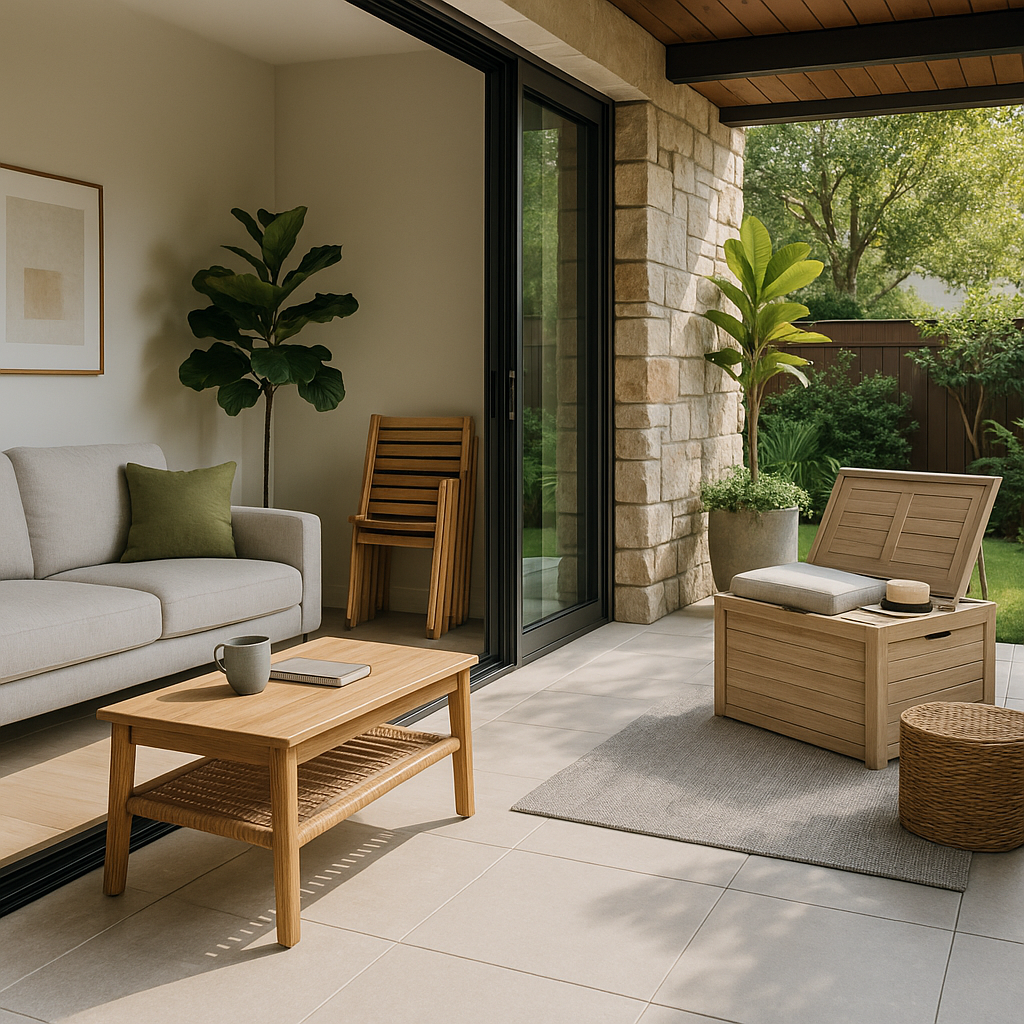
Australian multifunctional furniture setup blending indoor and outdoor living, featuring sliding glass doors, stackable chairs, and a storage bench doubling as seating.

Australia: Multifunctional Furniture Trends Down Under

In Australia, the housing landscape has traditionally featured larger homes, but urbanization and a focus on sustainability have brought small-space living into focus here as well. Cities like Sydney and Melbourne have seen a rise in micro-apartments and laneway houses, where efficient use of space is paramount. 

Additionally, Australia’s growing interest in tiny houses on wheels for sustainable, off-grid living has paralleled the global tiny house movement. Aussies, known for their innovative spirit, have embraced multifunctional furniture with a modern, stylish twist:

  • Indoor-Outdoor Flexible Furniture: A unique aspect in many Australian homes is the blending of indoor and outdoor living spaces. Folding or sliding glass doors often open small interiors to a patio or deck, effectively extending the living area. Multifunctional furniture plays into this by using pieces that can serve indoors and outdoors. For example, a set of stackable outdoor chairs might double as extra dining seating inside. A storage bench on the patio can hold cushions and also work as a coffee table or extra indoor seating when pulled in. This flexibility lets tiny homes capitalize on good weather and merge their interior with nature, a hallmark of Australian living.
  • Space-Saving Bed Designs: Australian designers have introduced various bed innovations for small spaces. Besides the ubiquitous sofa beds and Murphy beds, there’s a trend of elevated platform beds in studio apartments. Essentially building a bed frame with significant storage or even an entire wardrobe underneath. Some tiny house builders in Australia incorporate bed lifts, where a bed on a pulley system can be raised to the ceiling when not in use and lowered at night. Additionally, trundle beds and bunk beds are used creatively. A sofa or bench with a pull-out trundle can provide a second bed for guests. Bunk beds aren’t just for kids. They allow two adults to sleep in a footprint only slightly larger than a twin bed. This is great for hosting friends in a tiny home or maximizing a small guest room.
  • Modular and Flat-Pack Furniture: Given Australia’s distance from other major manufacturing hubs, shipping large furniture can be costly. This has made flat-pack and modular furniture especially popular. Companies offer pieces that can be easily assembled in tight spaces or configured in various ways. One can find modular shelving that turns into a desk, or flat-pack sofa kits that include built-in storage compartments. The beauty of modular setups is that they can change with the homeowner’s needs. Australians might reconfigure a modular lounge into an L-shape when moving to a new apartment, or add extra modules if the space allows. Brands like Globewest produce designer compact sofas and tables that marry style with small proportions. Showing that you don’t have to sacrifice aesthetics for practicality.
  • Murphy Desks and Wall Furniture: Home offices have become more common in small Australian homes. Leading to creative Murphy desks and wall-mounted workstations. These are fold-down desks that mount to a wall or inside a cabinet and can be closed up when the workday is over. Blending back into the living space. Some designs include chalk boards or art on the underside of the desk. So when it’s folded up it actually serves as wall décor. Likewise, wall-mounted folding ironing boards, laundry drying racks, and even fold-out ironing cabinets. Are used to save space in utility areas. Australians living tiny appreciate when even the chores can be accommodated without dedicated rooms.
  • Built-In Seating and Custom Storage: In many Australian tiny houses, you’ll see built-in benches with storage under the seat. This not only saves space by tightly fitting the dimensions of the house. It also secures the furniture for homes on wheels that may move. The storage bench becomes a sofa with some cushions and inside it might hold anything from kitchen pantry overflow to clothes. Australian tiny home builders also frequently include stairs that double as cabinets. And multi-purpose lofts that can serve as both storage and a cozy reading nook or guest sleeping area. The design philosophy often emphasizes quality over quantity. Having a few multi-use pieces crafted to fit the space, rather than many small, separate furniture items. This results in an uncluttered look that aligns with the modern Australian interior style. Which tends to be clean, bright, and open, even in a very small home.

Australian interiors for tiny living combine ideas borrowed from around the world all adapted to the Australian lifestyle and climate. You’ll find Japanese-inspired sliding screens, European-style sofa beds, and American-invented Murphy beds. 

Whether it’s a chic micro-apartment in Melbourne or an off-grid tiny cabin in the outback. The best multifunctional furniture in Australia emphasizes durability and ease of use. Matching the laid-back yet resourceful Australian way of life. Space-saving doesn’t mean skimping on comfort. A well-chosen few pieces can make a small Aussie home feel welcoming and complete, ready for work, rest, and play.

Multifunctional Furniture for Tiny Homes Conclusion

Multifunctional furniture proves that limited space doesn’t have to limit your lifestyle. By carefully selecting pieces that adapt and serve many purposes, a tiny home can feel open, organized, and welcoming. Whether you’re embracing van life or outfitting a micro-apartment in the city. These smart furniture choices empower you to live big in a small home. And remember, maximizing your space isn’t just about furniture. Maximizing Natural Light in Small Interior Spaces can also make a huge difference in how open and airy your tiny home feels. By combining bright, light-filled design with clever furniture, even the smallest of homes can shine. Maximizing Natural Light in Small Interior Spaces.
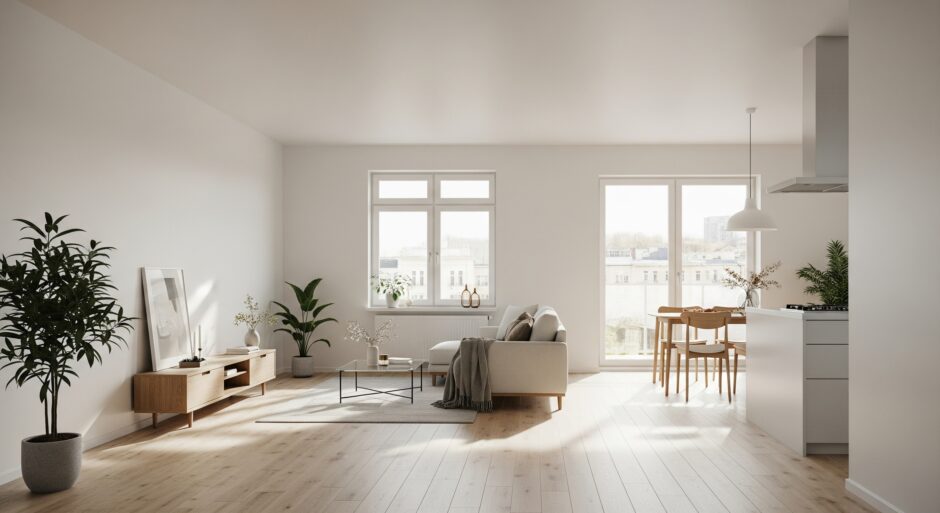
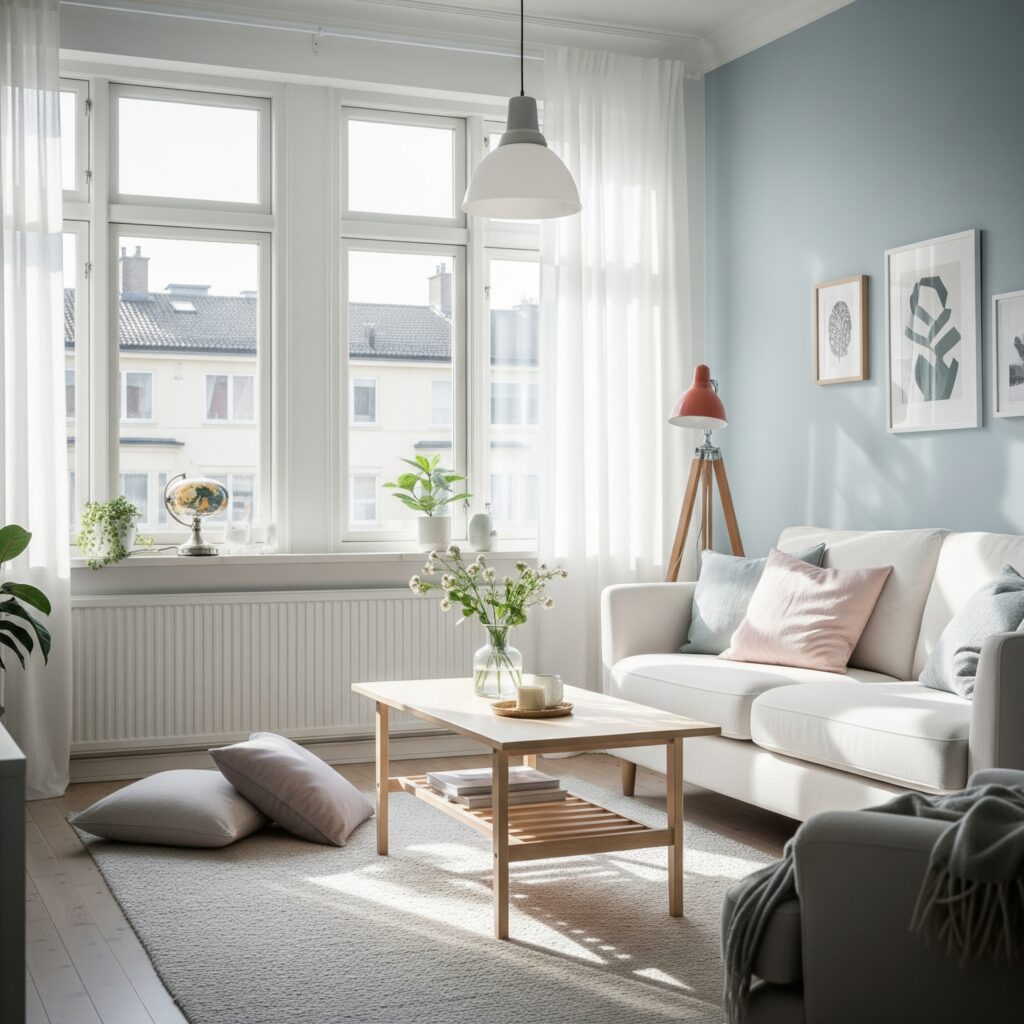
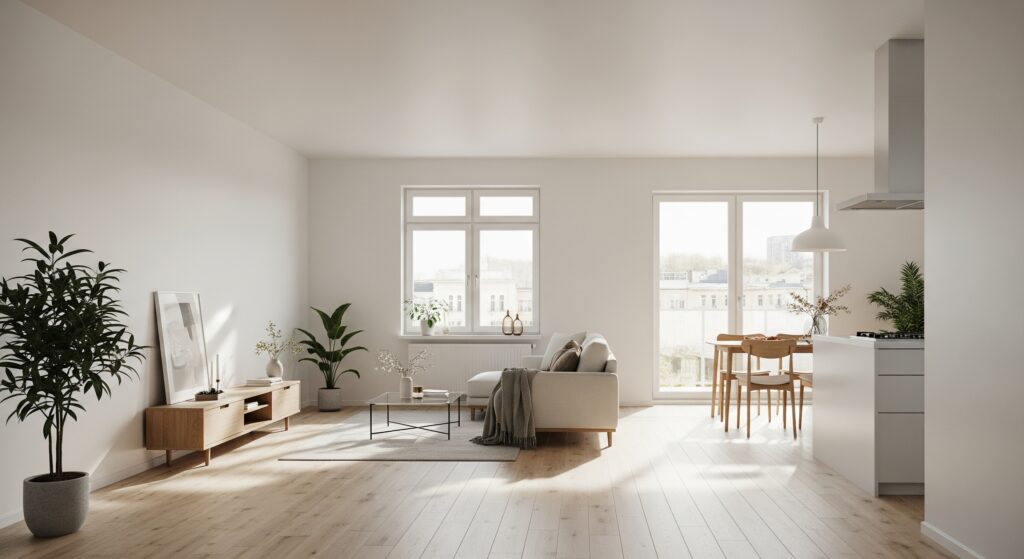
Open-layout small apartment with white walls, minimal furniture, and sunshine streaming in, making the space feel larger.

Maximizing Natural Light in Small Apartments

Imagine stepping into your city apartment and feeling immediately uplifted by a flood of natural light. In cramped urban living, sunshine can be a game-changer. It makes a small space feel open, warm, and inviting. Beyond just aesthetics, sunlight is scientifically proven to boost our mood and productivity. 

Unfortunately, many small apartments have limited windows or views of brick walls, leaving rooms dim and dreary. The good news? With a few clever design tweaks and lighting tricks, even the tiniest apartment can feel brighter and more spacious. 

This guide will walk you through maximizing natural light in a small apartment. From smart interior design choices to creative lighting solutions (including LED options for after dark). Let’s transform your cozy nook into a sun-kissed retreat, no renovation required!

FAQs of Maximizing Natural Light in a Small Apartment

How do you brighten a small apartment that has no direct sunlight?

Even if your apartment lacks direct sun, you can brighten it by using reflective décor and smart lighting. Use mirrors to bounce light from any source around the room. Decorate with light colors to maximize any available light. Also, use daylight-mimicking LED bulbs in multiple lamps to simulate natural light. Placing them near windows or corners can create the illusion of daylight where there is none.

What type of lighting is best for a small space?

A small space benefits from a layered lighting approach. This means combining ambient lighting with task lighting and accent lighting. Using bright, daylight-toned LED bulbs for ambient lighting keeps the space feeling open, while warmer accent lights can make it cozy. The mix prevents harsh shadows and spreads light evenly, making the room feel larger.

Can mirrors increase the natural light in a small apartment?

Yes, mirrors are one of the easiest ways to amplify natural light. By placing a mirror opposite a window or light source, it reflects incoming light back into the room. This effectively doubles the reach of that light. Even positioning mirrors on adjacent walls to a window helps distribute light and reduce shadows. In small or dark rooms, a well-placed large mirror can make a dramatic difference in brightness and the feeling of space.

Why are my white walls still making the room look dull?

White or light-colored walls help, but if they’re looking dull it could be due to lighting and finishes. First, ensure your light sources are adequate. You might need brighter bulbs or additional lamps to avoid gloomy areas. Secondly, the paint finish matters. Flat matte paint won’t reflect as much light as an eggshell or satin finish. Lastly, consider what’s on your white walls. Heavy artwork or dark shelves can counteract the brightness. Keep walls relatively uncluttered or use mirrors and metallic accents to enhance the light reflection.

What are daylight bulbs and should I use them?

Daylight bulbs are LED or CFL light bulbs that emit a bright, white light similar in color to natural midday sun (typically around 5000–6500K on the color temperature scale). They are great for brightening up a space and keeping colors in your decor looking true. In a small or dim apartment, using daylight bulbs in your main fixtures can make the room appear more open and lively, especially during daytime hours or in spaces with little natural sun. You might use warmer-toned bulbs in cozier areas like the bedroom, but daylight bulbs are excellent for kitchens, home offices, or anywhere you want a crisp, energetic feel.

Why Natural Light Matters in a Small Apartment

Natural light isn’t just a luxury. It’s essential for comfortable, healthy living, especially in tight urban quarters. Sunlight can make a small room appear larger by erasing harsh shadows and defining depth. Designers often say light is the best décor. It adds vibrancy and life to what might otherwise feel like a claustrophobic box

On a practical level, more daylight means less dependence on lamps during daytime. Which can save energy (and lower your electric bill) while also being eco-friendly. And let’s not forget the psychological perks. A sunlit home simply feels happier. 

Studies link exposure to natural light with improved mood and even better sleep cycles. Since sunlight helps regulate our circadian rhythm. In a small apartment that might double as your workspace, living area, and everything in between, these benefits are amplified. Bright, natural light can make you more productive and relaxed, turning a tiny apartment into a welcoming sanctuary.

In short, maximizing natural light can trick the eye (and brain) into experiencing a small interior as open, airy, and energizing. With that in mind, let’s explore how to invite more sunshine into your space and make every square foot count.

Keep Windows Clear and Your Layout Open

One of the simplest yet most impactful changes you can make is to liberate your windows. In many urban apartments, windows are few and small. So it’s critical to let every ray of light through. 

Start by evaluating what might be blocking your windows. Heavy drapes, bulky furniture, or even tall houseplants can significantly cut down the light reaching the rest of the room. Interior designer Emma Corner advises rearranging furnishings to avoid obstructing windows and to pull furniture away from window areas. Opting for low-profile pieces that won’t create dark corners. The goal is to have an unobstructed path for sunlight to travel deep into the room.

  • Ditch Heavy Curtains: Swap out thick, dark curtains for sheer drapes or even go curtain-free if privacy isn’t a concern. Light-colored sheer curtains allow sunlight to filter in while still offering some privacy. 

Hanging drapes high and wide (well above and beyond the window frame) can make windows look larger and ensure that when they’re open. 

If you need privacy or light control. Consider dual-layer solutions. For example, sheer blinds behind heavier curtains that you only draw at night. This way you have maximum light during the day and coverage when needed.

  • Thoughtful Furniture Placement: Re-think your room layout with light in mind. Ideally, you should be able to see the entire window from most of the room. If a bookcase or sofa is in front of part of the window, try moving it to another wall. 

Place taller, bulkier items against the darkest wall in the room, not next to windows. Use lower-profile sofas, benches or open shelving near windows instead of high-back couches or armor. This ensures nothing is looming between your light source and the rest of the space

Even small adjustments, can help light flow better. Like pushing a table a few inches away or swapping a solid coffee table for a glass one.

  • Keep Windows and Screens Clean: It sounds obvious, but a dirty window can block a surprising amount of sunlight. Dust, grime, or old streaks act like a filter, diffusing and dimming the light that passes through. 

Make it a habit to clean your windows at least monthly on the inside (and ask your super or landlord about cleaning the exteriors annually). Think of it like cleaning a pair of glasses. Suddenly everything is clearer and brighter. You’ll be amazed how much more cheerful your rooms look after a good window washing!

By keeping window areas clear and designing your layout around light, you create the foundation for a brighter apartment. The key is to think of light as a feature of your layout. Just as you’d arrange for flow or focal points, arrange for sunshine. An open, light-friendly layout coupled with bare or sheer-dressed windows will set the stage for all the other strategies to shine (literally).

Amplify Daylight with Reflective Surfaces

Once you’ve maximized the light coming in, the next step is to spread it around. This is where reflective surfaces become your small apartment’s best friend. Mirrors, glass, and metallic finishes can act like mini “light multipliers,” bouncing rays to reach areas that the sun would otherwise miss. Interior experts often use this trick in narrow or dark spaces, and it works wonders.

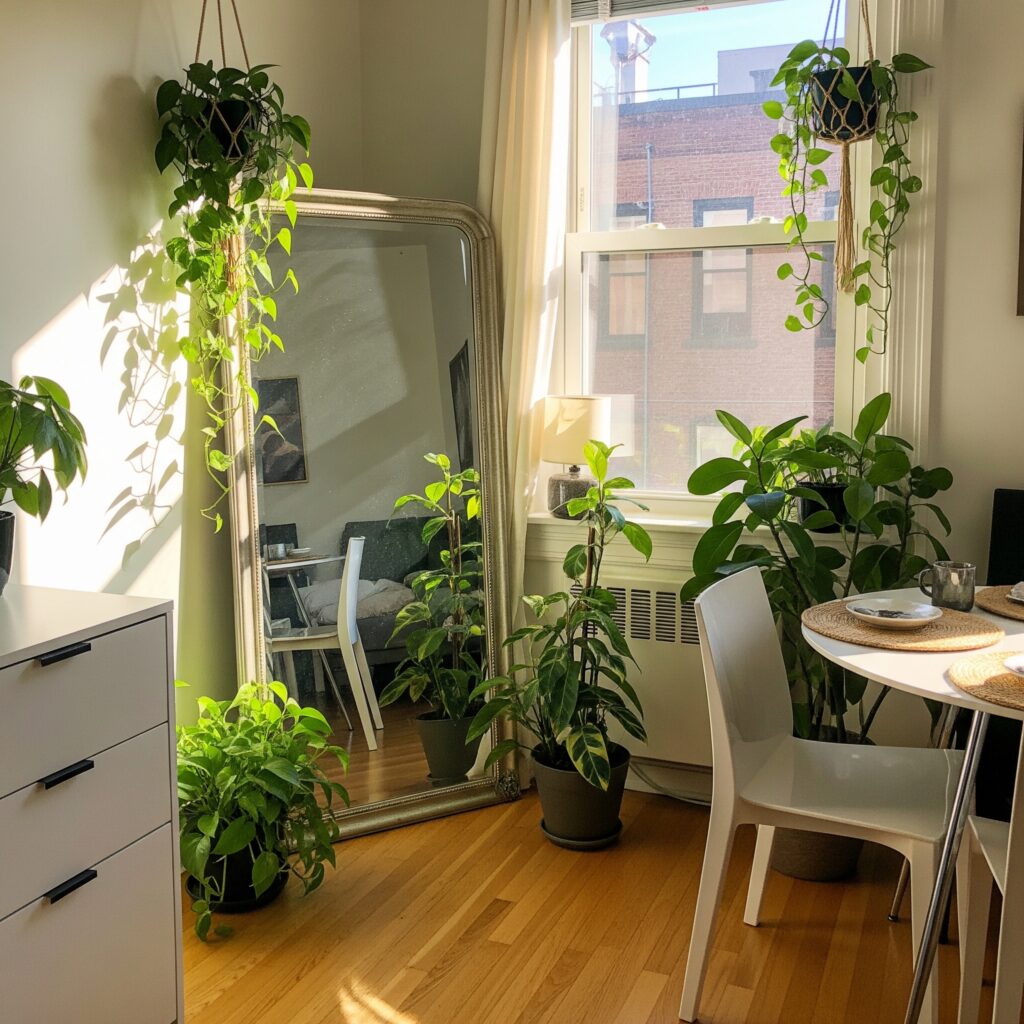
  • Strategic Mirror Placement: A well-placed mirror can double the impact of a single window. For instance, hanging a large mirror directly across from or adjacent to a window reflects light back into the room. Effectively brightening areas that are shadowed

In fact, mirrors and other shiny surfaces can “double, or even triple the reach of your natural light” by dispersing it throughout the space. 

Consider a big statement mirror on a wall opposite your light source, or multiple smaller mirrors arranged to catch incoming sun from different angles. However, avoid placing a mirror exactly facing a window where it beams sunlight straight back out or causes glare. Angle it slightly or position it to reflect onto a darker wall or corner. 

Pro tip: mirrored or glossy furniture (like a glass coffee table or a shiny console) can also help bounce light around while serving a function.

Painting your walls and ceilings in bright neutrals (classic white, soft off-white, or very light pastel hues). Will make a huge difference in how light your room feels. Soft whites and pale colors reflect a lot more of the light that hits them, unlike deep colors that soak it up. 

Pay special attention to your ceiling. A white or near-white ceiling is ideal, as it bounces light downwards (plus, it makes the ceiling feel higher). If you’re not up for repainting, focus on décor: choose light-colored furniture upholstery, rugs, and curtains. Even swapping a dark blue rug for a beige or cream one can brighten the floor. Which often gets a significant share of the light.

For finishes, consider a bit of shine. You don’t need to make everything reflective (too much gloss can be overwhelming and show imperfections). But semi-gloss or satin paints on trim and even walls can subtly reflect more light than flat matte paint. Add in some metallic or glass décor. Like a brass lamp, chrome stool, or a glass vase. Which can glint and gleam when sunlight hits, further spreading illumination. 

As Wendy Rose Gould wrote in Martha Stewart Living, lighter colors and reflective finishes help rooms feel more airy, while shinier paints bounce light for a sunnier vibe. The idea is to create a feedback loop. Daylight enters, hits a mirror or light object, bounces to another surface, and reaches deeper into your apartment.

By using reflection and color wisely, you amplify every ray of sun that enters your home. Even a single small window can seem to produce much more light if that light is ricocheting off mirror glass and bright walls. If you implement these tips, you might find you no longer need to turn on overhead lights until much later in the evening because your apartment stays naturally bright.

Layer Artificial Lighting for Evening & Low-Light Hours

Even with all the daylight hacks, there will still be times (especially at night or on gloomy days) when you need artificial lighting. 

The key in a small space is to layer your lighting rather than relying on a single harsh overhead lamp. A mix of ambient, task, and accent lighting will fill your apartment with a warm, even glow that complements the natural light you do get.

  • Ambient, Task, and Accent Lights: These are the three types of lighting designers recommend blending in any room. Ambient lighting is your general illumination. Often an overhead ceiling light or a bright floor lamp. That provides the base layer of light. 

Task lighting is more focused (think desk lamp, reading lamp by the sofa, under-cabinet lights in the kitchen) for specific activities. 

Accent lighting includes things like wall sconces, string lights, or small lamps that add depth and coziness but aren’t primarily for seeing tasks. In a small apartment, you actually need all three in different corners to avoid leaving any area in shadow. Relying only on one ceiling fixture can leave the corners dark and the vibe flat. 

Instead, distribute a few light sources around the room at different heights. For example, you might have a floor lamp in one corner, a table lamp on a side table, and an LED strip tucked behind your TV or along a shelf. 

By having 2–3 light sources in each room, you can adjust for mood and function. Ensuring no spot feels cave-like. 

Better Homes & Gardens suggests that blending these lighting types will “preserve that fresh, open feeling of natural light Even after the sun has set,” giving you options for any time of day. The result is a space that always feels inviting – bright when you need it, soft when you want it.

  • Use Daylight-Toned LED Bulbs: Not all light bulbs are created equal. To mimic a sunshine vibe, pay attention to the color temperature of your bulbs. Look for LED bulbs labeled “daylight” or around 5000K (Kelvin) color temperature. These emit a clean, white light similar to daylight, which can make your small apartment feel open and energetic. 

On the other hand, traditional warm bulbs (~2700K, with a yellow glow) are cozy for evenings but can make a small space feel a bit dim or enclosed if used exclusively. 

A good strategy is to use daylight bulbs in areas where you spend daytime and use warmer bulbs in lamps you turn on at night for relaxation. 

Additionally, LEDs are ideal for small apartments because they run cool (no overheating your space) and are energy-efficient. Brightness matters too. Go for bulbs with higher lumens (800+ lumens, equivalent to 60W or higher incandescent) to ensure sufficient light output. 

In short, bright white LED bulbs can simulate missing sunlight when nature isn’t providing it.

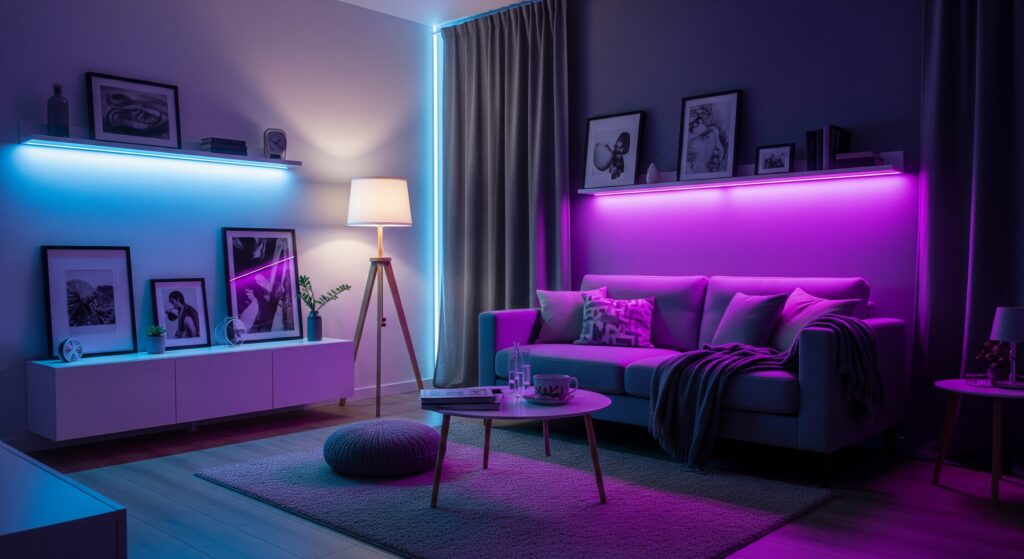
  • Smart Lighting & Mood Setting: To truly optimize your lighting, consider smart LED solutions. Modern LED strips and smart bulbs (like those from Govee or Philips Hue) allow you to adjust brightness and even color tone throughout the day. 

For instance, you can have a cool white light in the morning to help you wake up and switch to a soft warm glow at night to wind down, all in the same lamp. 

Some LED light strips can be hidden along the top of cabinets or behind furniture to uplight your walls or ceiling. Which makes the room feel taller and more open. Imagine a subtle glow washing your ceiling. It erases shadows in upper corners and adds a sophisticated ambience. 

You can also program smart lights to gradually brighten in the morning (simulating a sunrise in your windowless bedroom). Or dim in the evening. This not only sets the mood but also supports your natural sleep cycle. 

As one lighting blogger described, layering lights with smart controls gave the room multiple “moods”. Bright for productivity, and dim and cozy for relaxing. Transforming how the space felt at different times. 

In a tiny apartment, having that flexibility is a game-changer. Your living room can become a productive home office by day and a calming retreat by night. Just with the right lighting adjustments.

Remember, artificial lighting is the supplement to natural light, not the enemy. By thoughtfully layering and choosing the right bulbs, you ensure your apartment is well-lit 24/7. No more corner-of-shame that never sees light. And no more single glaring bulb casting harsh shadows. Instead, you’ll have a balanced lighting design that makes the most of daytime sun and seamlessly takes over after dusk. All while maintaining the airy atmosphere you’ve worked so hard to create.

Common Mistakes to Avoid in Small Spaces

While implementing the above strategies, beware of a few common pitfalls that can inadvertently keep your apartment looking dim or cramped. Avoiding these mistakes will ensure all your efforts to increase light aren’t in vain:

  • Heavy, Opaque Window Treatments: Thick blackout curtains or dark blinds can nullify all the natural light in a small apartment during the day. If you must have them , remember to open them fully each morning. 

A better approach is layering a blackout roller shade (for night) with sheer curtains. Or use bottom-up shades that let light in from the top of the window while preserving privacy below. Never leave heavy drapes partially closed all day; it’s a guaranteed way to waste good sunlight.

  • Dark, Matte Surfaces Overload: An accent wall in navy blue or a big black sofa can be dramatic, but in a tiny space it might drink up the light. One dark piece is fine, but balance it with plenty of light around it (throw blankets, cushions, art, etc.). 

Avoid painting ceilings or large sections of walls in dark colors. And if you have dark wood floors, use a light-colored rug to help bounce light upward. Essentially, don’t create a “cave” effect with too many dark surfaces.

  • Clutter and Tall Furniture Near Windows: Piling up decor, storage boxes, or tall bookshelves right next to your windows is a big no-no. Clutter not only blocks light physically but also visually makes a space feel cramped and darker. 

Keep window sills minimal. And if you have a massive shelf unit or wardrobe and nowhere else to put it. At least position it perpendicular to the window wall, not flat against it covering the glass. The more open the area around your windows, the better the light distribution.

  • Relying on a Single Light Source: We mentioned this in the lighting section, but it bears repeating as a “mistake to avoid.” Using only one overhead light and nothing else will leave your apartment full of gloom and shadows in the corners. It’s also harsh on the eyes. 

Spread out your lighting; even a couple of plug-in wall sconces or LED puck lights in shelves can make a difference if adding lamps is challenging. Don’t forget spots like corridors or closets. A dark entryway that opens into your living area can visually suck light away. A bright LED in the entry or a battery-powered puck light in a closet can eliminate those black holes.

  • Neglecting Maintenance: Over time, light fixtures and bulbs themselves can get dusty or dim (some LEDs and fluorescents lose brightness). Clean your light fixtures and replace bulbs that are getting old. And always fix any non-working lights. A burned-out bulb in a multi-light fixture not only reduces light, it also draws the eye and makes the space feel a bit uncared for.

By sidestepping these common errors, you’ll ensure your small apartment lighting strategy is foolproof. Think of it as removing barriers, both literal and figurative, to a bright and cheerful home. Now, with mistakes out of the way, you can fully enjoy the luminous little oasis you’ve created.

Embrace a Brighter, Cozier Apartment (Conclusion)

Living in a small urban apartment doesn’t mean you’re destined to live in the dark. With a blend of smart décor decisions and lighting know-how. Even the tiniest interior can feel open, airy, and full of life.

You’ve learned how simple swaps, like using mirrors, lighter colors, and sheer curtains, can dramatically amplify the daylight you have. You’ve rearranged and decluttered to give sunshine an unobstructed path. And when the natural light in your small apartment isn’t enough. You’ve added layers of warm, welcoming illumination. Bright daylight LEDs to banish shadows and soft accent lights to set the mood when the sun goes down.

The impact of these changes is not only visible in the aesthetic of your space but also tangible in how you feel at home. Morning rays streaming across a light-colored rug can make your coffee ritual feel more pleasant. A mirror catching the last daylight in the evening can extend that golden-hour glow just a bit longer. And later, when you switch on a few well-placed lamps, your apartment transforms into a cozy retreat with no dreary corners in sight.

By maximizing the natural light in a small apartment, thoughtfully supplementing with artificial light. You’re doing more than just decorating. You’re improving your quality of life in a small space. Your apartment will feel larger, your spirits lighter.

So throw open those curtains, adjust that lamp, and bask in your brightly lit haven. A sunnier, happier home is well within reach, and you’ve got all the tools to achieve it.

If you’re ready to take your bright, airy apartment to the next level. Explore our guide, 10 Brilliant Design Hacks for Small Apartments. From multifunctional furniture to clever storage solutions. These tips work beautifully alongside improving natural light in a small apartment strategies. Creating spaces that feel larger, more functional, and perfectly tailored to city living.

 Just as lighting can brighten and open up a small room, choosing the right furniture can dramatically improve functionality in tight quarters. If you’re looking for ways to further optimize a compact home, our latest guide on the Best Multifunctional Furniture for Tiny Homes is a must-read. It explores innovative furniture that serves dual purposes – from beds that turn into desks to tables with hidden storage – all designed to make the most of limited space. By combining smart lighting strategies and space-saving furniture, you’ll create an interior that not only feels larger and brighter but also adapts effortlessly to your needs. Be sure to check out the furniture guide to transform your small interior into a truly versatile and comfortable living space.

small apartment interior design hack, compact bedroom with under-bed storage drawers open and floating shelves near the ceiling, plus a big mirror to make the space feel larger.

10 Brilliant Design Hacks for Small Apartments

10 Brilliant Small Apartment Interior Design Hacks

Living in a small city apartment doesn’t mean sacrificing style or comfort. In fact, a clever approach to small apartment interior design can transform a cramped room into a chic, functional home. The key is to maximize every square inch with smart choices that add both style and functionality. Below are 10 brilliant design hacks for small apartments. Practical tips to help urban renters and tiny-home dwellers make the most of their space without compromising on aesthetics.

Frequently Asked Questions

How do I make my small apartment feel bigger?

To make a small apartment appear larger, use design tricks that fool the eye. Keep the space uncluttered and opt for a few sizable pieces of furniture instead of many small ones (this reduces visual clutter). Use light paint colors on the walls to reflect light, and add mirrors strategically to create an illusion of depth and amplify brightness. Good lighting is essential too – a well-lit room always feels more open. Essentially, anything that increases light or continuity in the space (like cohesive colors, open-leg furniture, and clear countertops) will help a small apartment feel bigger than it really is..

What colors are best for small apartment interior design?

Generally, light and neutral colors work best in small apartments because they reflect light and don’t overwhelm the space. Whites, soft grays, creams, and pastels on walls or large furniture can make the room feel more expansive and airy. You can always add brighter colors in small accents (pillows, art, rugs) for personality. If you love dark or bold colors, you can certainly use them in moderation – for example, a deep blue or green accent wall or a dark sofa can add coziness and contrast, just balance it with plenty of light around it. The key is to keep a consistent color scheme; having too many different bold colors in one small area can make it feel busy. So, stick to one or two main hues and a subtle palette for a harmonious, open look.

How can I maximize storage in a small apartment?

To maximize storage, think creatively and use every nook. Use furniture that doubles as storage (beds or sofas with built-in compartments, storage ottomans, coffee tables with shelves or drawers). Take advantage of vertical space by installing wall shelves, tall bookcases, or cabinets up to the ceiling. Don’t forget about corners and the backs of doors – corner shelves and over-the-door organizers can hold a lot. Utilize under-bed space with flat storage boxes for off-season clothing or extra linens. In closets, add extra rods or hanging organizers to fully use the height. The kitchen can benefit from wall-mounted racks for pots, pans, and spices. Also, periodically declutter and rotate out items you don’t need; the fewer items you have to store, the easier it is to organize. By combining smart furniture choices with savvy organizing tools, you can find a place for everything in your small apartment.

What are the best furniture pieces for small apartments?

The best furniture for small apartments are pieces that are compact, multi-functional, or easy to tuck away. Some top picks include: sofa beds or daybeds, which give you seating by day and a bed by night; nesting tables or stacking stools that can be pulled out when needed and otherwise stored together; drop-leaf tables that expand for dining or work but fold down slim when not in use; and wall-mounted desks or floating consoles that don’t take up floor space. Also, consider furniture with exposed legs (like mid-century style sofas or chairs) – they tend to make a room feel more open by showing more floor. Modular furniture is great too, since it can often reconfigure to suit different occasions. And always look for pieces with built-in storage, such as an ottoman or bench that opens up, or a bed frame with drawers. These kinds of furnishings deliver high functionality without overwhelming your limited space.

How do I divide a studio apartment into separate spaces?

Dividing a studio apartment into distinct “rooms” is all about creating zones with your furniture and decor. Use rugs, lighting, and furniture placement to signal different areas. For example, place your sofa with its back toward your bed to form a boundary between the living area and sleeping area. A bookshelf or open shelving unit can act as a partial room divider while still letting light through. You can also use a curtain or folding screen to give privacy to a sleeping nook – a ceiling-mounted curtain that you can pull around the bed at night works wonders and can be drawn open during the day. Even arranging a desk or dresser at the foot of your bed can create a sense of separation. The idea is to visually segment the space: maybe one corner is clearly the “living room” with a comfy chair and lamp, and another corner has a small dining set or desk for work. Lighting can help too – a pendant light over your “dining area” and a floor lamp by the “living area” signal different zones. By using these techniques, you’ll make your studio feel like it has multiple rooms, which makes for more comfortable and organized living.

1. Embrace Multi-Purpose Furniture

One golden rule of small apartment interior design is to pick furniture that serves more than one purpose. Every piece should “earn its place” in your home.

For example, instead of a traditional sofa and separate guest bed, opt for a daybed or sleeper sofa that functions as both a couch and a bed. Look for a bed frame with built-in drawers for extra storage, or use an ottoman or entry bench that can store blankets and books inside.

This way, one item does the job of two (or more). Saving precious space while keeping your apartment organized. Some smart multi-functional pieces to consider include:

  • Convertible sofas/beds: Sleep at night, lounge by day (ideal for studios).
  • Drop-leaf or expanding tables: Use as a small desk or dining table, then fold away when you need floor space.
  • Storage ottomans and benches: Provide seating or a footrest, plus hide clutter inside.

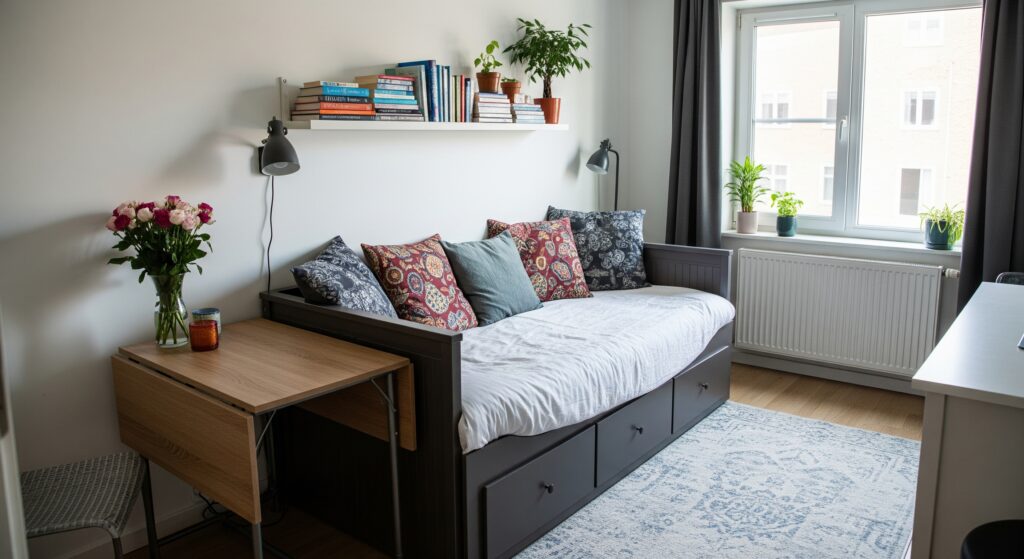
By choosing dual-purpose furnishings, you’ll maintain a stylish look while maximizing functionality in your small apartment.

Small apartment living room with a gray daybed sofa and a fold-down table, maximizing functionality in a tight space.

2. Opt for Folding & Stow-Away Pieces

When every square foot counts, furniture that folds up or tucks away is your best friend. Ask yourself if certain items need to be out 24/7 – if not, consider a foldable version. For instance, use folding chairs or stackable stools that you can store in a closet when they’re not needed for guests. A wall-mounted drop-down desk or table can provide a workspace or dining surface that disappears flat against the wall afterward.

Murphy beds (hideaway wall beds) are another classic small-space hack. By day, it’s a closed cabinet or sofa. By night, it pulls down into a comfy bed. These solutions keep your floor clear and your home flexible.

As Architectural Digest notes, furnishings that can fold or close up when not in use will free up floor space and prevent surfaces from becoming clutter magnets. The result is a cleaner, more open feel in your apartment whenever you’re not actively using those items.

3. Maximize Vertical Space

When you can’t expand horizontally, think vertically. Walls, corners, and even ceilings are opportunities for storage and decor in a small apartment. Instead of letting blank walls go unused. Install tall shelving units, wall cabinets, or floating shelves all the way up to the ceiling to store books, decor, or kitchen supplies. In the kitchen, consider a pot rack or pegboard on the wall to hang cookware. The idea is to “build up, not out”.

Designers advise using your walls for functional storage wherever possible. For example, mount a desk or shelving unit on the wall to gain extra storage. Something a simple art piece wouldn’t provide. Even the back of doors can host hooks or shoe organizers for added capacity. By leveraging vertical space, you draw the eye upward and free up valuable floor area.

As one interior designer puts it, looking upward is the best antidote to limited floor space. Think floor-to-ceiling bookcases, hanging planters, or high-mounted cabinets that make the most of unused wall real estate. Your walls can do more than hold paint; let them work hard for you as storage and display.

4. Wall-Mount & Float Everything You Can

In a small apartment, clutter at floor level makes the space feel cramped. The more you can float things off the floor, the more open and navigable your home will feel. Replace floor lamps with wall-mounted sconces or pendant lights. Choose floating nightstands and shelves instead of bulky floor-bound furniture.

Mount your TV on the wall rather than using a media console, and consider hanging bicycles or other gear on wall racks if possible. Even in the bathroom, wall-mounted towel racks or storage caddies will keep the ground clear.

Keeping the floor visible gives the illusion of more space. A tip echoed by designers who suggest picking sofas and chairs with exposed legs so you can see underneath.

The Spruce notes that when you can see under and around your furniture, it instantly “gives the illusion of more floor space”. Helping the whole room feel a bit larger. So lift it up! From floating furniture to high-hung curtains. Elevating elements off the floor will make your small apartment feel lighter and less crowded.

the use of mirrors can help make you apartment look larger than it actually is

5. Use Mirrors to Expand and Brighten

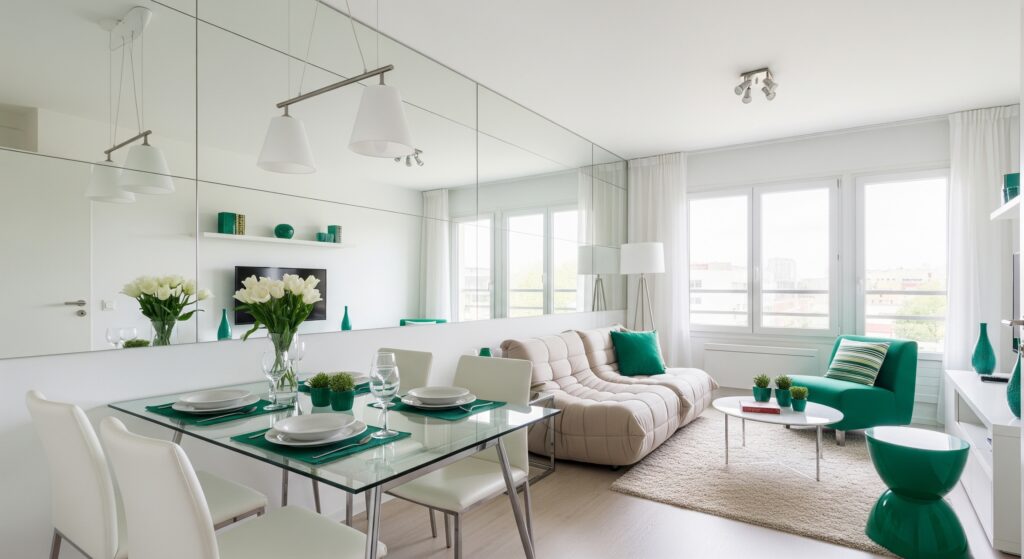
Mirrors are a small-space miracle. By reflecting light and views, mirrors create an illusion of depth that can visually double a room’s perceived size. Try hanging a large mirror on a focal wall to open up the room.

Even better, position mirrors across from windows or light sources. This bounces more natural light around and combats that claustrophobic feeling common in small or dark apartments. You could also arrange a gallery of smaller mirrors for some artistic flair. Or use a mirrored backsplash in a tiny kitchen to make it feel roomier.

Reflective furnishings like a mirrored coffee table or glass console can have a similar effect. Adding function while keeping the space visually light. The goal is to trick the eye into perceiving more depth and brightness. As designers often say, mirrors are your friend in small apartments. They amplify light and make any snug room feel more expansive than it really is.

6. Layer Your Lighting

Proper lighting can make a cramped apartment feel cozy and inviting instead of cave-like. Small apartments often have limited natural light, so it’s crucial to compensate with layered lighting. Start with a bright overhead or ceiling fixture to evenly illuminate the room. Then add task and ambient lights. A floor or table lamp in the corner, under-cabinet lights in the kitchen, and reading lamps or wall sconces by the bed or sofa.

Having multiple light sources at different heights creates a warm glow and eliminates dark corners. Instantly making the space feel larger and more comfortable. For example, combine a stylish pendant or flush-mount ceiling light with a few plug-in wall sconces to save floor space.

Lamps on tables or shelves can add gentle accent lighting. Don’t forget decorative lighting like LED fairy lights on a bookshelf. Or a small table lamp on a windowsill for added charm. The idea is to be generous with lighting.

Architectural Digest recommends plenty of light sources in every room to make up for lack of windows, resulting in a bright, inviting atmosphere.

Bonus tip: Pair your lighting with the mirror hack above by placing a lamp near a mirror or glossy surface to double the illumination. In a small home, good lighting is a game-changer for both functionality and mood.

7. Stick to Light, Cohesive Colors

The colors you choose can greatly impact how spacious your apartment feels. In general, lighter hues and a cohesive palette will make a small apartment appear bigger and brighter. Walls painted white or soft neutrals (light gray, beige, pale blue, etc.) reflect more light, helping the space feel open and airy.

Designers in one makeover noted that switching dark gray walls to white immediately gave an apartment a larger, more open feel by inviting light to bounce around. You can certainly add pops of color with artwork, throw pillows, or rugs. But keep the overall scheme controlled and harmonious. Too many clashing colors or busy patterns in a small space can make it seem cluttered. Instead, stick to a limited color palette so there’s a visual unity throughout the apartment.

For example, you might choose a base of white and oak wood tones. Then layer in touches of green and gold as accents. This kind of warm, modern minimalism prevents the space from feeling chaotic.

If you’re a fan of bold color, you don’t have to avoid it entirely. You could paint an accent wall or use a deep tone in a powder room for a jewel-box effect. Just balance it with simpler surrounding decor. The main idea is to be intentional with color choices. A small apartment looks largest when the walls and big furnishings stay within a cohesive, light spectrum, creating continuity from room to room.

8. Scale Up (Select Few Large Pieces Over Many Small Ones)

It may sound counterintuitive, but using a few large-scale furniture pieces or decor items can actually make a small space feel bigger. Whereas filling it with lots of tiny pieces can make it feel cluttered. Instead of dozens of knick-knacks or an ensemble of small chairs and tables, pick a couple of statement pieces to anchor the room.

For example, one decent-sized sofa or sectional often makes a room look more open compared to multiple armchairs and ottomans scattered about. Likewise, one big piece of art on the wall can have more impact with less clutter than a gallery of many small frames.

Architectural Digest advises that there’s “no need to use pint-size furniture” everywhere in a petite space. A full-size couch or a large piece of artwork can work wonderfully, as long as you use fewer total pieces overall.

Apartment Therapy similarly notes that you should “aim for fewer, larger objects” and clear off surfaces. Because the more floor and wall area you can see, the more spacious the room will seem. So don’t be afraid to go a bit bigger with a signature lamp, an oversize mirror, or a streamlined sofa. By thoughtfully editing your belongings and décor, you allow each piece to breathe. The space will actually feel more open and curated, rather than crammed with assorted small items.

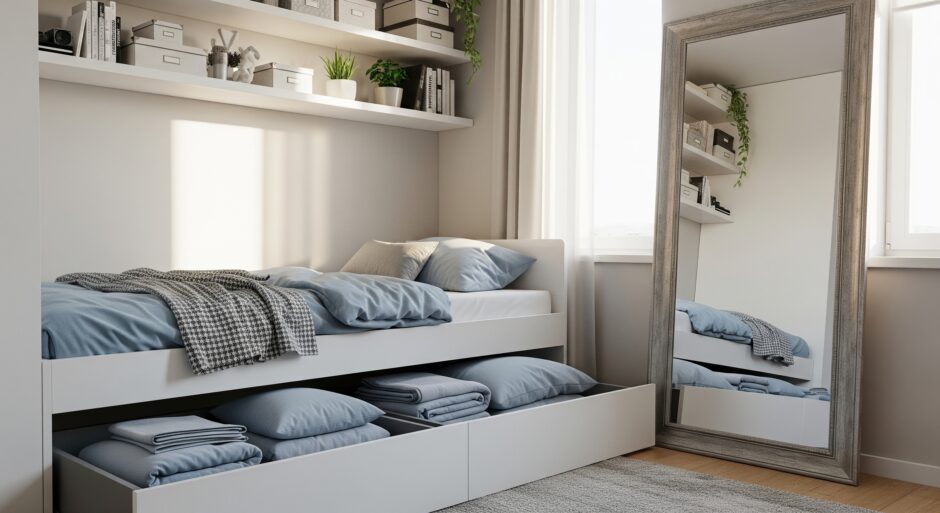
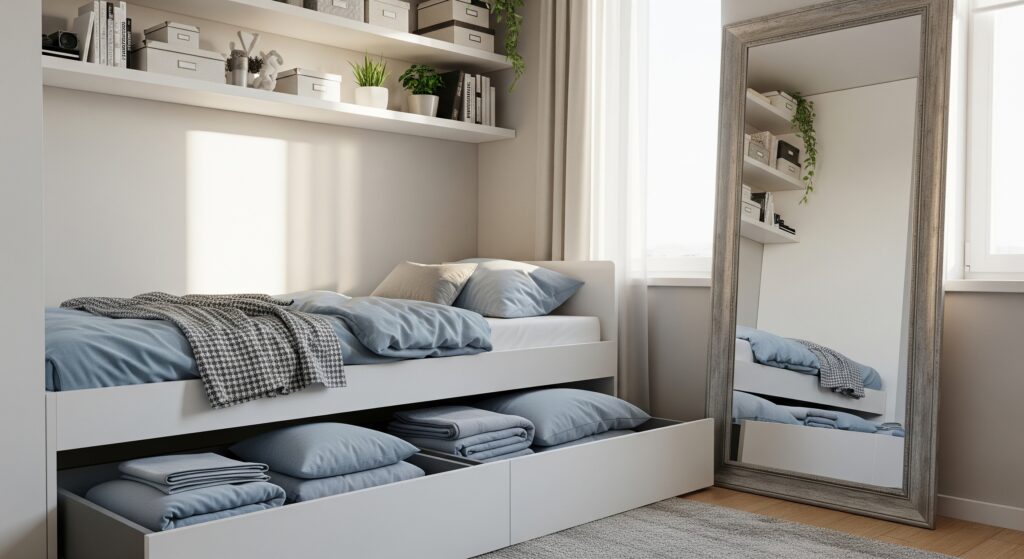
Compact bedroom with under-bed storage drawers open and floating shelves near the ceiling, plus a big mirror to make the space feel larger.

9. Sneak in Hidden Storage 

Clutter is the nemesis of any small apartment. To keep your home feeling serene and spacious, practice smart storage habits and regular editing of your stuff.

First, make use of hidden storage opportunities everywhere. Think under-bed storage boxes or drawers, vacuum-sealed bags of off-season clothes on a high closet shelf, and multi-functional furniture (as discussed) that hides items out of sight. Sofas or beds with built-in storage, coffee tables with drawers, and wall organizers can all be lifesavers.

Also consider creative nooks. Can you stash luggage or bins on an upper closet shelf, or use the space under a sofa for flat storage?

One renter-friendly trick is to hang a chic curtain across an open shelving unit or alcove. This will instantly conceal any visual clutter behind it (an idea Apartment Therapy has showcased in small-space tours). Secondly, be diligent about decluttering. In cozy quarters, you need to periodically purge things you don’t need. Interior designers suggest regularly donating or storing away items and furniture that you no longer use.

For example, if your tiny kitchen’s cabinets are overflowing, it might be time to pare down rarely-used gadgets. The benefit is twofold. Fewer items to manage, and more free space to enjoy. As one expert puts it, invest in versatile, storage-focused pieces and “don’t forget to utilize every square inch of existing storage… we’ll never be above an under-the-bed hack!”.

In short, own less, and store smart. By keeping belongings edited and neatly tucked away, your small apartment will feel open, organized, and calming to live in. Not to mention easier to tidy up!

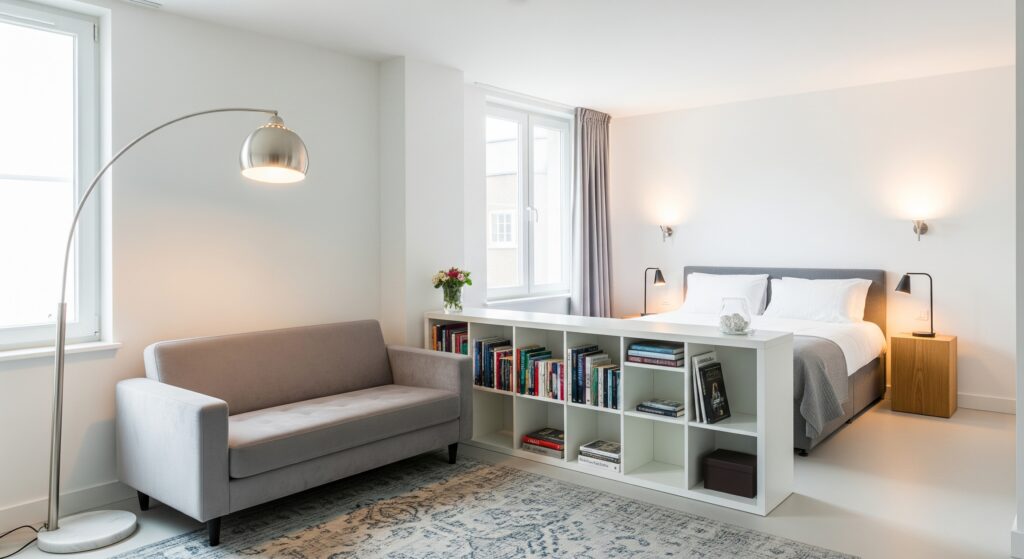
Studio apartment divided into living and sleeping areas using a bookshelf as a room divider, with light colors and ample lighting making the space feel open.

10. Define Zones in Studio Apartments

If your entire apartment consists of one open room (as in a studio or micro-loft), a great design hack is to create the illusion of separate rooms by defining zones. This makes your small home far more functional and cozy. You can do this by using furniture as room dividers.

For instance, place a bookshelf or a double-sided shelving unit between your sleeping area and living area to act as a partition. A sofa positioned back-to-back with your bed, or a console table behind a couch, can section off space as well. Area rugs are another powerful tool. Put a rug under your seating area and a different rug (or no rug) under the bed to visually distinguish those “rooms.”

Curtains hung from the ceiling can also enclose a bedroom nook at night and be drawn open during the day. The goal is to carve out functional spots: a place to sleep, a place to lounge, maybe a corner to work or eat. Even if they’re all in one open space. Designers call this creating intentional “zones” within a layout.

For example, a kitchen island or bar can mark the kitchen vs. living area, and an ottoman or low bookshelf can serve as a subtle divider between the “living room” and “bedroom” areas. This strategy is especially helpful in open-plan layouts, making them feel like they have distinct rooms. Keep the divisions airy and not completely wall-like, so you maintain flow and light.

By delineating zones, your studio home will feel more structured and multi-purpose: you’ll psychologically feel like you have separate rooms, which is key to comfortable small-space living.

We Hope you enjoyed this informative article on 10 brilliant small apartment interior design and are able to take away some tips and tricks that will help you make your apartment feel more like a home. Feel free to check out our last luxury interior design blog. And stay tuned for much more on everything Home & Garden.

json Copy

One of the simplest ways to instantly enhance any small apartment design is with better lighting. Our post, Maximizing Natural Light in Small Interior Spaces, shares practical tips to bring more sunshine in and layer artificial light for a brighter, more inviting home. Pairing these ideas with your design hacks will make your small space both stylish and luminous.

Things To Look For When Choosing The Right Lawn Fertilizer

There are many different types of lawn fertilizers on the market today, and it can be hard to know which one is right for your lawn. To help you make the best decision, you need to understand what each type of fertilizer contains and how it benefits your lawn. This article will help you do just that.

A Guide to help you choose the right lawn fertilizer

What is Fertilizer and What Does it do for your Lawn

Lawn fertilizer is a substance that is added to soil in order to improve the quality of plants that grow in that soil. There are many different types of fertilizer on the market, but they all contain three primary nutrients: nitrogen, phosphorus, and potassium.

Each of these nutrients plays an important role in plant growth. Nitrogen helps plants to produce green leaves and stems, phosphorus helps to create strong roots, and potassium helps to build sturdy plants.

Lawn fertilizer also contains secondary nutrients, which are essential for plant growth but are not used as often as the primary nutrients. These include calcium, magnesium, and sulfur.

When you are choosing a fertilizer for your lawn, you need to consider the type of grass you have and the type of soil you have. Different fertilizers are better suited for different types of grass and soil. You also need to consider the age of your lawn. New lawns need more nitrogen than older lawns do.

The Three Main Types of Lawn Fertilizer – Organic, Synthetic, and Slow-Release

There are many lawn fertilizers to choose from, let us help you make the right choice with this helpful guide

There are three main types of lawn fertilizers on the market today: organic, synthetic, and slow-release.

Organic fertilizers are made from natural ingredients, such as manure, compost, or plant residue. These fertilizers are slow to release nutrients, which means they provide a steady stream of nutrients to your lawn over an extended period of time.

Synthetic fertilizers are made from chemicals, and they are fast-acting. This means that they provide a large burst of nutrients to your lawn all at once. However, this also means that the effects of synthetic fertilizers wear off quickly.

Slow-release fertilizers are a blend of organic and synthetic materials. They provide a slow and steady release of nutrients to your lawn, which helps to maintain healthy plants over time.

Organic fertilizers are better for the environment because they release their nutrients slowly over time, whereas inorganic fertilizers release their nutrients all at once. Inorganic fertilizers can also be harmful to the environment if they leach into groundwater or if they are accidentally ingested by animals.

How to Choose the right Fertilizer for your Lawn

When you are choosing a fertilizer for your lawn, it is important to consider the type of grass you have, the type of soil you have, and the age of your lawn.

If you have a cool-season grass such as Kentucky bluegrass or fescue, you should use a fertilizer that contains a high level of nitrogen. If you have a warm-season grass such as Bermuda or zoysia, you should use a fertilizer that contains a high level of phosphorus.

If you have clay soil, you should use a lawn fertilizer that contains a high level of potassium. If you have sandy soil, you should use a fertilizer that contains a high level of nitrogen.

New lawns need more nitrogen than older lawns do. A good rule of thumb is to use a fertilizer that contains 10-20-10. This means that the fertilizer contains 10% nitrogen, 20% phosphorus, and 10% potassium.

When choosing a fertilizer, be sure to read the label carefully to make sure that it meets your needs.

Benefits of Using Fertilizer on your Lawn

Fertilizer is an important part of lawn care. Techniques used for lawn fertilization Salt Lake City help to improve the quality of your lawn and they also help to keep it healthy all year round.

Here are some of the benefits of using fertilizer on your lawn:

1. Fertilizer helps to make your lawn green and healthy.

2. Fertilizer helps to strengthen your lawn’s roots.

3. Fertilizer helps to build a thick, healthy lawn.

4. Fertilizer helps to prevent weed growth.

5. Fertilizer helps to protect your lawn from disease.

6. Fertilizer helps to keep your lawn looking good all year long.

How to Apply Fertilizer to your Lawn

When you apply fertilizer to your lawn, you should always follow the directions on the package. Different fertilizers have different application rates, and it is important to follow the instructions carefully.

The best time to fertilize your lawn is in the spring or fall when the grass is growing actively. You should never fertilize your lawn in the summer when the grass is dormant.

There are three main ways to apply fertilizer to your lawn: by hand, with a spreader, or with a rotary hoe.

If you are applying fertilizer by hand, you should spread the fertilizer evenly over the entire surface of the lawn. Be careful not to over-fertilize, as this can damage your lawn. A good rule of thumb is to apply no more than 1 pound of fertilizer per 1,000 square feet of lawn.

If you are using a spreader, you should calibrate the spreader before you start using it. This will ensure that you are applying the correct amount of fertilizer to your lawn. It is important to keep in mind that different types of spreaders will have different application rates.

If you are using a rotary hoe, you should run it over the entire surface of your lawn in overlapping circles. This will help to distribute the fertilizer evenly.

After you have applied the fertilizer, you should water your lawn deeply. This will help the fertilizer to reach the roots of the grass.

Fertilizers to Avoid Using on your Lawn

There are some lawn fertilizers that you should avoid using on your lawn. These fertilizers can be harmful to the environment or to your lawn.

1. Do not use any fertilizer that contains mercury.

2. Do not use any fertilizer that contains lead.

3. Do not use any fertilizer that contains arsenic.

4. Do not use any fertilizer that contains phosphorus unless your soil test indicates that your lawn needs it.

5. Do not use any manure-based fertilizer unless it has been composted.

6. Do not use any fertilizer that contains sewage sludge.

By following these guidelines, you can choose the best fertilizer for your lawn and avoid using any fertilizers that could be harmful to your lawn or to the environment.

Tips for Keeping your Lawn Healthy and Looking Great

  • When you fertilize your lawn, be sure to water it deeply afterward. This will help the fertilizer to reach the roots of the grass.
  • Another way to keep your lawn healthy is to mow it regularly. Be sure to mow it at the right height, and never mow it too short.
  • You should also rake up any leaves or other debris that falls on your lawn. Leaves can smother the grass and cause weed growth.
  • If you have any bare spots on your lawn, you can fill them in with some topsoil or seed. Be sure to water the areas well after you have filled them in.

Lawn fertilizer is an important part of keeping your lawn healthy and looking great. By following the guidelines in this article, you can choose the right fertilizer for your lawn and avoid using any fertilizers that could be harmful to your lawn or the environment. Tips for keeping your lawn healthy and looking great are also provided. We hope this guide will serve you well and if you feel you still are in need of some more advice or would just like a helping hand, don’t hesitate to contact your local lawn care professionals.

We Hope you enjoyed this informative blog post. Be sure to come back as we post more home improvement blogs and if you haven’t already, be sure to check out our last blog post on the best home security systems to learn how you can not only improve your home security but also lower your electricty bill with premium security screens for windows and doors.

Best Home Security Systems

Have you been battling insecurity since time immemorial? If so, you need to install a home security system to curb thievery alongside many other things. Owning a home is so fulfilling, but living in it without security is putting your family’s life at stake. Hence always put the well-being of others and yours too at the forefront. There is no need for you to have regrets after something negative occurs: as they say, prevention is better than cure. If you have security personnel, it is alright. However, incorporating home security systems will not hurt anybody; better yet, it will complement everything. The points that follow show some of the best home security systems.

protect your valuable and loved ones with a home security system

Security Plus Security Screens

There’s no better security than preventing break-ins all together. These elegant screens are custom built to fit any opening in your home or business. Industry tested and made with military grade mesh, these screens are built to be able to withstand any sort of beating. Security Plus technicians will install your screens throughout your home or business giving you the easiest managed security system for once they are installed, no monitoring is necessary. The security screens will do there job all on their own giving you back your piece of mind knowing that you loved ones and valuables are safe.

SimpliSafe Home Security System

This security system works on its terms and does not require long contracts or any salesperson. That way, you have the will to choose the monitoring levels that suit you best and the equipment. Note that it is easy to set up; hence, you will not struggle. The monthly monitoring is inexpensive, fit for anyone who is renting and has customizable plans and equipment you will put to your liking. However, it is important to point out that it has limited outdoor camera options. SimpliSafe security system has no expenses after purchase, although you must incorporate professional monitoring around the clock. It is also recommended for renters since most have the minimal square footage, plus it uses wireless installation.

Google Nest Secure

It is a smart security system that is designed to be self-monitored. Despite the fact, you must add professional monitoring all through. If you wish to, you can even use more of the Nest products since they are meant to enhance security. There is a Nest app that allows you to monitor your home wherever you are. Besides that, it also allows you to arm or disarm your system and watch a live video of the occurrences. Note that the app is user-friendly; hence, it will be easy to maneuver while using it. Google Nest Secure security system has a responsive window and door sensors and a stylish design if you are keen on such details. If you wish to get affordable monitoring, you can access these services from Brinks. Like the SimpliSafe, the Google Nest Secure home security system is easy to install; you do not require a professional’s help to set it up.

via GIPHY

Before settling on one, ensure that you do thorough research about them to get the best one yet. You should know their prices before-hand; you can start saving early enough. Remember that purchasing a home security system will undoubtedly make your security personnel irrelevant since you will manage anyone who goes in and out with an app’s help. If you have never considered using security systems, you will eventually give it a thought. Also, if you find installing the first two systems a hard task, you can always seek the help of a professional; they will certainly give you a hand.

UPDATE 8/26/22 – Looking to upgrade your lawn care routine? Check out our most recent post to help you choose the best lawn fertilizer on the market!

3 Quick Tips For Affordable Luxury Interior Design

A person’s home is their castle. It’s the place where they keep all their stuff and the place where they sleep at night. So it makes perfect sense that so many people would want their home to look like the castle it is.

Unfortunately, luxury quality interior design isn’t the easiest thing to find. Not only do you need to figure out what you want, you also have to find a company that can make it happen. And of course, sometimes interior design can be as easy as moving around some furniture. Which brings up the most important question of all; how can you find affordable luxury interior design?

1: Decide Things Ahead Of Time

There are plenty of renovation companies that can help you with interior Affordable luxury white marble kitchendesign ideas. However, many of these companies charge some money for a consultation. Alternatively, they may have an interior designer they work with. In that case, you’ll have to hire a separate interior designer in addition to the contracting company!

You can skip many of these problems by doing some of your own research. Go to a local hardware store and ask some questions. Many hardware stores have sections devoted specifically to interior design and home improvement. You can talk to the employees who deal with that section and they can give you a number of ideas. Once you know what you want you can skip half the opening process!

2: Luxury Doesn’t Mean Expensive

Affordable luxury interior design is an amazing phrase. It sounds impressive. It immediately brings affordable-luxury-apartmentto mind thick purple drapes and plush carpet. Or perhaps modern art hanging from the walls. Whatever mental image your brain supplies at the word “luxury”, it’s important to remember that it’s still a subjective term.

This means you can make things look luxurious without paying luxury prices. Affordable luxury interior design is the name of the game, after all!

Instead of getting the thick, velvet drapes you could get drapes of a less expensive material. Keep them clean and they look just as amazing. Try to match colors between your furniture and your wallpaper. Find standing lamps and other simple furnishings that give the room a much more impressive appearance.

3: Shop Around

Of course, shopping around is more than just looking for the lowest price. In point of fact, the lowest price is often the worst choice. Companies don’t charge lower prices if they can avoid it. If a company is charging a price too great to be true, it’s probably a lie.

Look for a good bargain. A professional contracting company can go a long way in ensuring your home looks amazing. They can work closely with you and a designer to ensure your home has the luxurious appearance you want.

At the end of the day, approach the idea from the perspective of making it beautiful to your tastes. You don’t have to meet anyone else’s idea of “luxurious”. As long as you’re happy with the way your home looks, then you have won a major victory!


Wrapping up 3 Quick Affordable Luxury Interior Design Tips

If you like this article and want to see more about how to improve the look of your home with affordable luxury and other interior design styles then please check out my full website www.gradysinteriors.com and feel to feel comment and share.

UPDATE: Check out our blog on the best home security systems to protect your loved ones and valuables