10 Brilliant Small Apartment Interior Design Hacks
Living in a small city apartment doesn’t mean sacrificing style or comfort. In fact, a clever approach to small apartment interior design can transform a cramped room into a chic, functional home. The key is to maximize every square inch with smart choices that add both style and functionality. Below are 10 brilliant design hacks for small apartments. Practical tips to help urban renters and tiny-home dwellers make the most of their space without compromising on aesthetics.
Frequently Asked Questions
How do I make my small apartment feel bigger?
To make a small apartment appear larger, use design tricks that fool the eye. Keep the space uncluttered and opt for a few sizable pieces of furniture instead of many small ones (this reduces visual clutter). Use light paint colors on the walls to reflect light, and add mirrors strategically to create an illusion of depth and amplify brightness. Good lighting is essential too – a well-lit room always feels more open. Essentially, anything that increases light or continuity in the space (like cohesive colors, open-leg furniture, and clear countertops) will help a small apartment feel bigger than it really is..
What colors are best for small apartment interior design?
Generally, light and neutral colors work best in small apartments because they reflect light and don’t overwhelm the space. Whites, soft grays, creams, and pastels on walls or large furniture can make the room feel more expansive and airy. You can always add brighter colors in small accents (pillows, art, rugs) for personality. If you love dark or bold colors, you can certainly use them in moderation – for example, a deep blue or green accent wall or a dark sofa can add coziness and contrast, just balance it with plenty of light around it. The key is to keep a consistent color scheme; having too many different bold colors in one small area can make it feel busy. So, stick to one or two main hues and a subtle palette for a harmonious, open look.
How can I maximize storage in a small apartment?
To maximize storage, think creatively and use every nook. Use furniture that doubles as storage (beds or sofas with built-in compartments, storage ottomans, coffee tables with shelves or drawers). Take advantage of vertical space by installing wall shelves, tall bookcases, or cabinets up to the ceiling. Don’t forget about corners and the backs of doors – corner shelves and over-the-door organizers can hold a lot. Utilize under-bed space with flat storage boxes for off-season clothing or extra linens. In closets, add extra rods or hanging organizers to fully use the height. The kitchen can benefit from wall-mounted racks for pots, pans, and spices. Also, periodically declutter and rotate out items you don’t need; the fewer items you have to store, the easier it is to organize. By combining smart furniture choices with savvy organizing tools, you can find a place for everything in your small apartment.
What are the best furniture pieces for small apartments?
The best furniture for small apartments are pieces that are compact, multi-functional, or easy to tuck away. Some top picks include: sofa beds or daybeds, which give you seating by day and a bed by night; nesting tables or stacking stools that can be pulled out when needed and otherwise stored together; drop-leaf tables that expand for dining or work but fold down slim when not in use; and wall-mounted desks or floating consoles that don’t take up floor space. Also, consider furniture with exposed legs (like mid-century style sofas or chairs) – they tend to make a room feel more open by showing more floor. Modular furniture is great too, since it can often reconfigure to suit different occasions. And always look for pieces with built-in storage, such as an ottoman or bench that opens up, or a bed frame with drawers. These kinds of furnishings deliver high functionality without overwhelming your limited space.
How do I divide a studio apartment into separate spaces?
Dividing a studio apartment into distinct “rooms” is all about creating zones with your furniture and decor. Use rugs, lighting, and furniture placement to signal different areas. For example, place your sofa with its back toward your bed to form a boundary between the living area and sleeping area. A bookshelf or open shelving unit can act as a partial room divider while still letting light through. You can also use a curtain or folding screen to give privacy to a sleeping nook – a ceiling-mounted curtain that you can pull around the bed at night works wonders and can be drawn open during the day. Even arranging a desk or dresser at the foot of your bed can create a sense of separation. The idea is to visually segment the space: maybe one corner is clearly the “living room” with a comfy chair and lamp, and another corner has a small dining set or desk for work. Lighting can help too – a pendant light over your “dining area” and a floor lamp by the “living area” signal different zones. By using these techniques, you’ll make your studio feel like it has multiple rooms, which makes for more comfortable and organized living.
1. Embrace Multi-Purpose Furniture
One golden rule of small apartment interior design is to pick furniture that serves more than one purpose. Every piece should “earn its place” in your home.
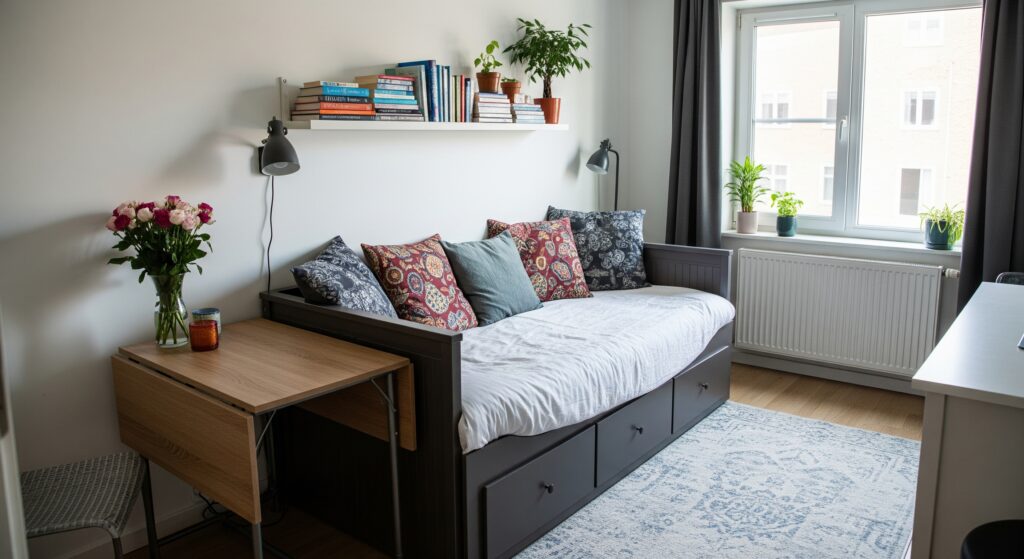
For example, instead of a traditional sofa and separate guest bed, opt for a daybed or sleeper sofa that functions as both a couch and a bed. Look for a bed frame with built-in drawers for extra storage, or use an ottoman or entry bench that can store blankets and books inside.
This way, one item does the job of two (or more). Saving precious space while keeping your apartment organized. Some smart multi-functional pieces to consider include:
- Convertible sofas/beds: Sleep at night, lounge by day (ideal for studios).
- Drop-leaf or expanding tables: Use as a small desk or dining table, then fold away when you need floor space.
- Storage ottomans and benches: Provide seating or a footrest, plus hide clutter inside.
By choosing dual-purpose furnishings, you’ll maintain a stylish look while maximizing functionality in your small apartment.
2. Opt for Folding & Stow-Away Pieces
When every square foot counts, furniture that folds up or tucks away is your best friend. Ask yourself if certain items need to be out 24/7 – if not, consider a foldable version. For instance, use folding chairs or stackable stools that you can store in a closet when they’re not needed for guests. A wall-mounted drop-down desk or table can provide a workspace or dining surface that disappears flat against the wall afterward.
Murphy beds (hideaway wall beds) are another classic small-space hack. By day, it’s a closed cabinet or sofa. By night, it pulls down into a comfy bed. These solutions keep your floor clear and your home flexible.
As Architectural Digest notes, furnishings that can fold or close up when not in use will free up floor space and prevent surfaces from becoming clutter magnets. The result is a cleaner, more open feel in your apartment whenever you’re not actively using those items.
3. Maximize Vertical Space
When you can’t expand horizontally, think vertically. Walls, corners, and even ceilings are opportunities for storage and decor in a small apartment. Instead of letting blank walls go unused. Install tall shelving units, wall cabinets, or floating shelves all the way up to the ceiling to store books, decor, or kitchen supplies. In the kitchen, consider a pot rack or pegboard on the wall to hang cookware. The idea is to “build up, not out”.
Designers advise using your walls for functional storage wherever possible. For example, mount a desk or shelving unit on the wall to gain extra storage. Something a simple art piece wouldn’t provide. Even the back of doors can host hooks or shoe organizers for added capacity. By leveraging vertical space, you draw the eye upward and free up valuable floor area.
As one interior designer puts it, looking upward is the best antidote to limited floor space. Think floor-to-ceiling bookcases, hanging planters, or high-mounted cabinets that make the most of unused wall real estate. Your walls can do more than hold paint; let them work hard for you as storage and display.
4. Wall-Mount & Float Everything You Can
In a small apartment, clutter at floor level makes the space feel cramped. The more you can float things off the floor, the more open and navigable your home will feel. Replace floor lamps with wall-mounted sconces or pendant lights. Choose floating nightstands and shelves instead of bulky floor-bound furniture.
Mount your TV on the wall rather than using a media console, and consider hanging bicycles or other gear on wall racks if possible. Even in the bathroom, wall-mounted towel racks or storage caddies will keep the ground clear.
Keeping the floor visible gives the illusion of more space. A tip echoed by designers who suggest picking sofas and chairs with exposed legs so you can see underneath.
The Spruce notes that when you can see under and around your furniture, it instantly “gives the illusion of more floor space”. Helping the whole room feel a bit larger. So lift it up! From floating furniture to high-hung curtains. Elevating elements off the floor will make your small apartment feel lighter and less crowded.
5. Use Mirrors to Expand and Brighten
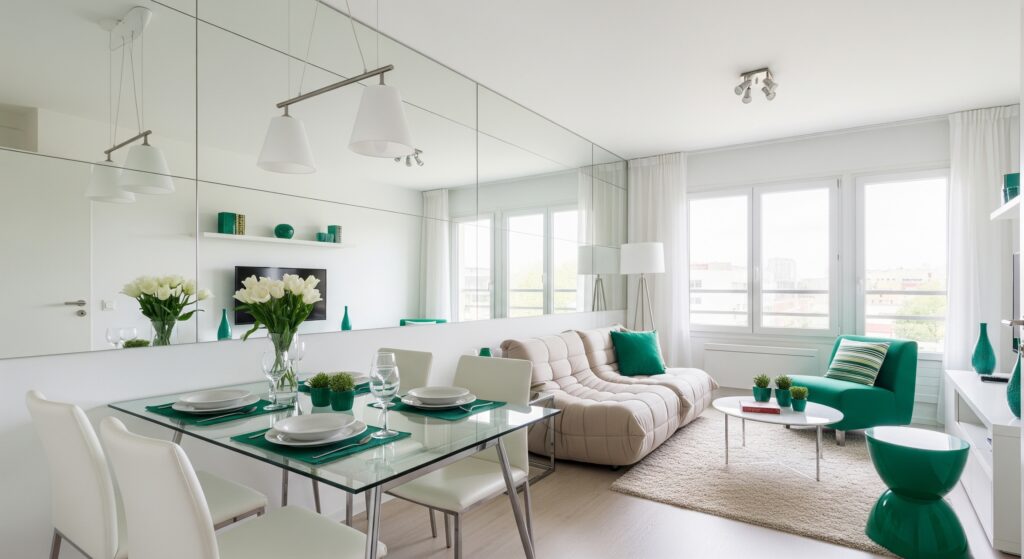
Mirrors are a small-space miracle. By reflecting light and views, mirrors create an illusion of depth that can visually double a room’s perceived size. Try hanging a large mirror on a focal wall to open up the room.
Even better, position mirrors across from windows or light sources. This bounces more natural light around and combats that claustrophobic feeling common in small or dark apartments. You could also arrange a gallery of smaller mirrors for some artistic flair. Or use a mirrored backsplash in a tiny kitchen to make it feel roomier.
Reflective furnishings like a mirrored coffee table or glass console can have a similar effect. Adding function while keeping the space visually light. The goal is to trick the eye into perceiving more depth and brightness. As designers often say, “mirrors are your friend” in small apartments. They amplify light and make any snug room feel more expansive than it really is.
6. Layer Your Lighting
Proper lighting can make a cramped apartment feel cozy and inviting instead of cave-like. Small apartments often have limited natural light, so it’s crucial to compensate with layered lighting. Start with a bright overhead or ceiling fixture to evenly illuminate the room. Then add task and ambient lights. A floor or table lamp in the corner, under-cabinet lights in the kitchen, and reading lamps or wall sconces by the bed or sofa.
Having multiple light sources at different heights creates a warm glow and eliminates dark corners. Instantly making the space feel larger and more comfortable. For example, combine a stylish pendant or flush-mount ceiling light with a few plug-in wall sconces to save floor space.
Lamps on tables or shelves can add gentle accent lighting. Don’t forget decorative lighting like LED fairy lights on a bookshelf. Or a small table lamp on a windowsill for added charm. The idea is to be generous with lighting.
Architectural Digest recommends plenty of light sources in every room to make up for lack of windows, resulting in a bright, inviting atmosphere.
Bonus tip: Pair your lighting with the mirror hack above by placing a lamp near a mirror or glossy surface to double the illumination. In a small home, good lighting is a game-changer for both functionality and mood.
7. Stick to Light, Cohesive Colors
The colors you choose can greatly impact how spacious your apartment feels. In general, lighter hues and a cohesive palette will make a small apartment appear bigger and brighter. Walls painted white or soft neutrals (light gray, beige, pale blue, etc.) reflect more light, helping the space feel open and airy.
Designers in one makeover noted that switching dark gray walls to white immediately gave an apartment a larger, more open feel by inviting light to bounce around. You can certainly add pops of color with artwork, throw pillows, or rugs. But keep the overall scheme controlled and harmonious. Too many clashing colors or busy patterns in a small space can make it seem cluttered. Instead, stick to a limited color palette so there’s a visual unity throughout the apartment.
For example, you might choose a base of white and oak wood tones. Then layer in touches of green and gold as accents. This kind of warm, modern minimalism prevents the space from feeling chaotic.
If you’re a fan of bold color, you don’t have to avoid it entirely. You could paint an accent wall or use a deep tone in a powder room for a jewel-box effect. Just balance it with simpler surrounding decor. The main idea is to be intentional with color choices. A small apartment looks largest when the walls and big furnishings stay within a cohesive, light spectrum, creating continuity from room to room.
8. Scale Up (Select Few Large Pieces Over Many Small Ones)
It may sound counterintuitive, but using a few large-scale furniture pieces or decor items can actually make a small space feel bigger. Whereas filling it with lots of tiny pieces can make it feel cluttered. Instead of dozens of knick-knacks or an ensemble of small chairs and tables, pick a couple of statement pieces to anchor the room.
For example, one decent-sized sofa or sectional often makes a room look more open compared to multiple armchairs and ottomans scattered about. Likewise, one big piece of art on the wall can have more impact with less clutter than a gallery of many small frames.
Architectural Digest advises that there’s “no need to use pint-size furniture” everywhere in a petite space. A full-size couch or a large piece of artwork can work wonderfully, as long as you use fewer total pieces overall.
Apartment Therapy similarly notes that you should “aim for fewer, larger objects” and clear off surfaces. Because the more floor and wall area you can see, the more spacious the room will seem. So don’t be afraid to go a bit bigger with a signature lamp, an oversize mirror, or a streamlined sofa. By thoughtfully editing your belongings and décor, you allow each piece to breathe. The space will actually feel more open and curated, rather than crammed with assorted small items.
9. Sneak in Hidden Storage
Clutter is the nemesis of any small apartment. To keep your home feeling serene and spacious, practice smart storage habits and regular editing of your stuff.
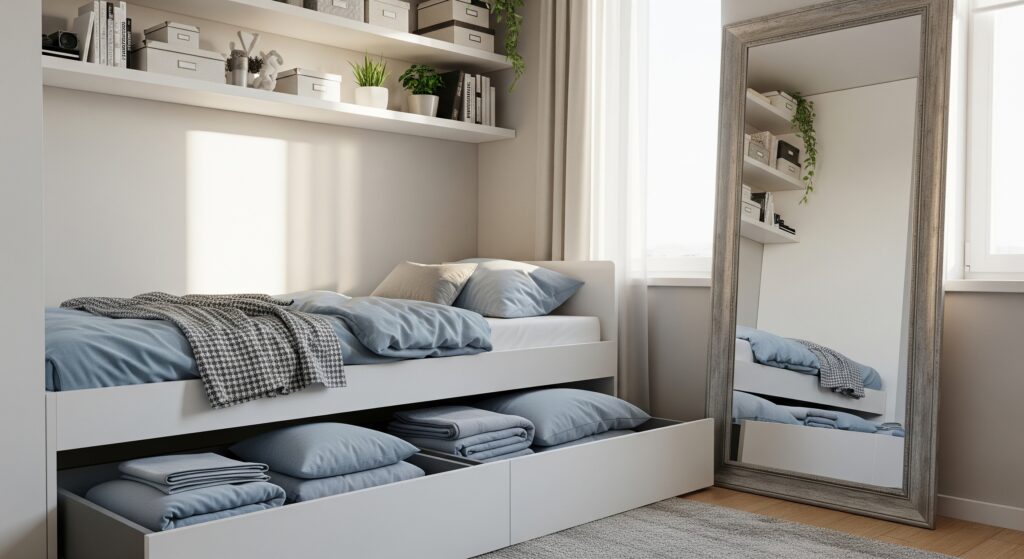
First, make use of hidden storage opportunities everywhere. Think under-bed storage boxes or drawers, vacuum-sealed bags of off-season clothes on a high closet shelf, and multi-functional furniture (as discussed) that hides items out of sight. Sofas or beds with built-in storage, coffee tables with drawers, and wall organizers can all be lifesavers.
Also consider creative nooks. Can you stash luggage or bins on an upper closet shelf, or use the space under a sofa for flat storage?
One renter-friendly trick is to hang a chic curtain across an open shelving unit or alcove. This will instantly conceal any visual clutter behind it (an idea Apartment Therapy has showcased in small-space tours). Secondly, be diligent about decluttering. In cozy quarters, you need to periodically purge things you don’t need. Interior designers suggest regularly donating or storing away items and furniture that you no longer use.
For example, if your tiny kitchen’s cabinets are overflowing, it might be time to pare down rarely-used gadgets. The benefit is twofold. Fewer items to manage, and more free space to enjoy. As one expert puts it, invest in versatile, storage-focused pieces and “don’t forget to utilize every square inch of existing storage… we’ll never be above an under-the-bed hack!”.
In short, own less, and store smart. By keeping belongings edited and neatly tucked away, your small apartment will feel open, organized, and calming to live in. Not to mention easier to tidy up!
10. Define Zones in Studio Apartments
If your entire apartment consists of one open room (as in a studio or micro-loft), a great design hack is to create the illusion of separate rooms by defining zones. This makes your small home far more functional and cozy. You can do this by using furniture as room dividers.
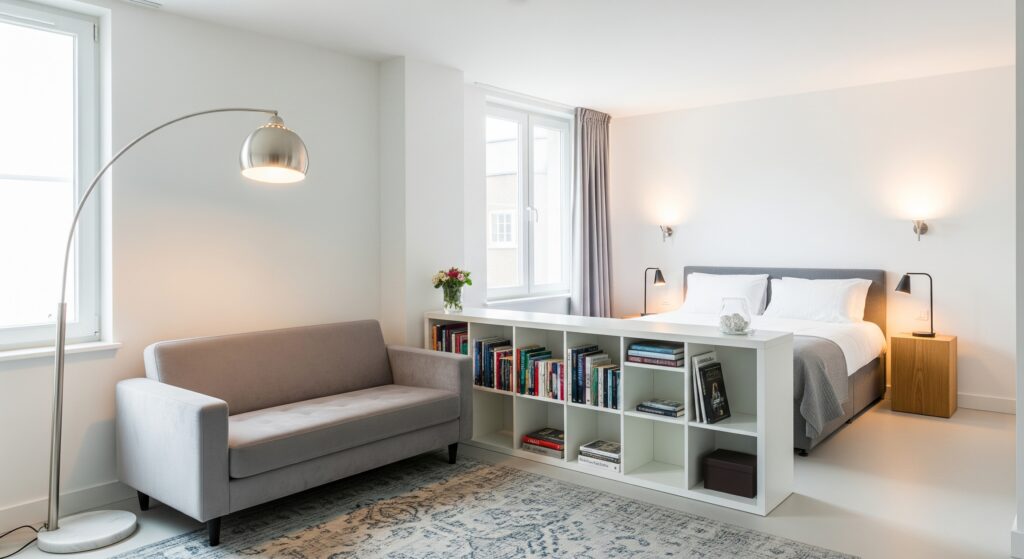
For instance, place a bookshelf or a double-sided shelving unit between your sleeping area and living area to act as a partition. A sofa positioned back-to-back with your bed, or a console table behind a couch, can section off space as well. Area rugs are another powerful tool. Put a rug under your seating area and a different rug (or no rug) under the bed to visually distinguish those “rooms.”
Curtains hung from the ceiling can also enclose a bedroom nook at night and be drawn open during the day. The goal is to carve out functional spots: a place to sleep, a place to lounge, maybe a corner to work or eat. Even if they’re all in one open space. Designers call this creating intentional “zones” within a layout.
For example, a kitchen island or bar can mark the kitchen vs. living area, and an ottoman or low bookshelf can serve as a subtle divider between the “living room” and “bedroom” areas. This strategy is especially helpful in open-plan layouts, making them feel like they have distinct rooms. Keep the divisions airy and not completely wall-like, so you maintain flow and light.
By delineating zones, your studio home will feel more structured and multi-purpose: you’ll psychologically feel like you have separate rooms, which is key to comfortable small-space living.
We Hope you enjoyed this informative article on 10 brilliant small apartment interior design and are able to take away some tips and tricks that will help you make your apartment feel more like a home. Feel free to check out our last luxury interior design blog. And stay tuned for much more on everything Home & Garden.
json CopyOne of the simplest ways to instantly enhance any small apartment design is with better lighting. Our post, Maximizing Natural Light in Small Interior Spaces, shares practical tips to bring more sunshine in and layer artificial light for a brighter, more inviting home. Pairing these ideas with your design hacks will make your small space both stylish and luminous.
One Comment
Comments are closed.