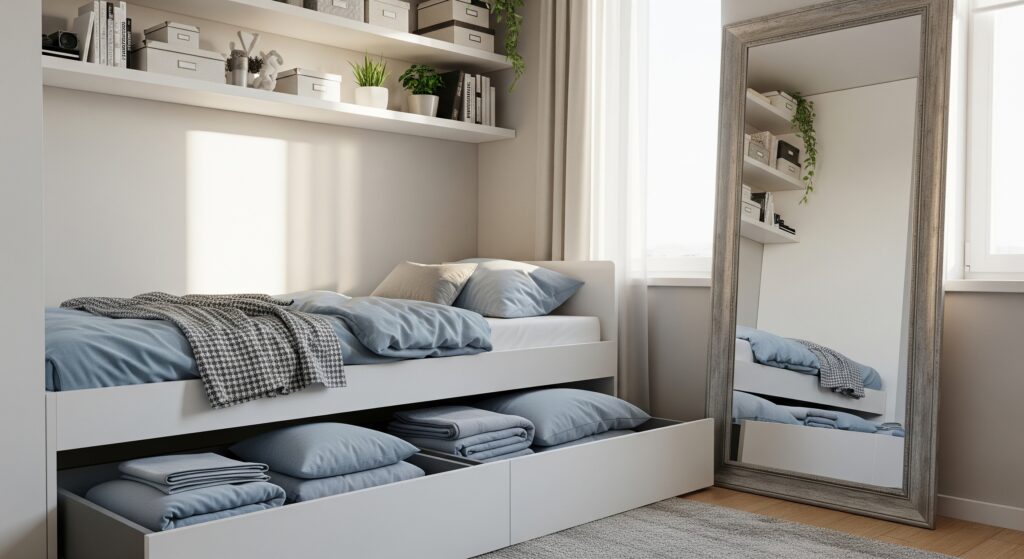
Living in a tiny home or any small space means every square foot counts. The right furniture can transform a cramped area into a comfortable, efficient living space by serving multiple functions at once. From beds that fold into desks to tables that expand for dinner and collapse afterward. Multifunctional pieces are the key to maximizing limited space.
Below are some of the best multifunctional furniture ideas for tiny homes to help you live large in a small footprint:
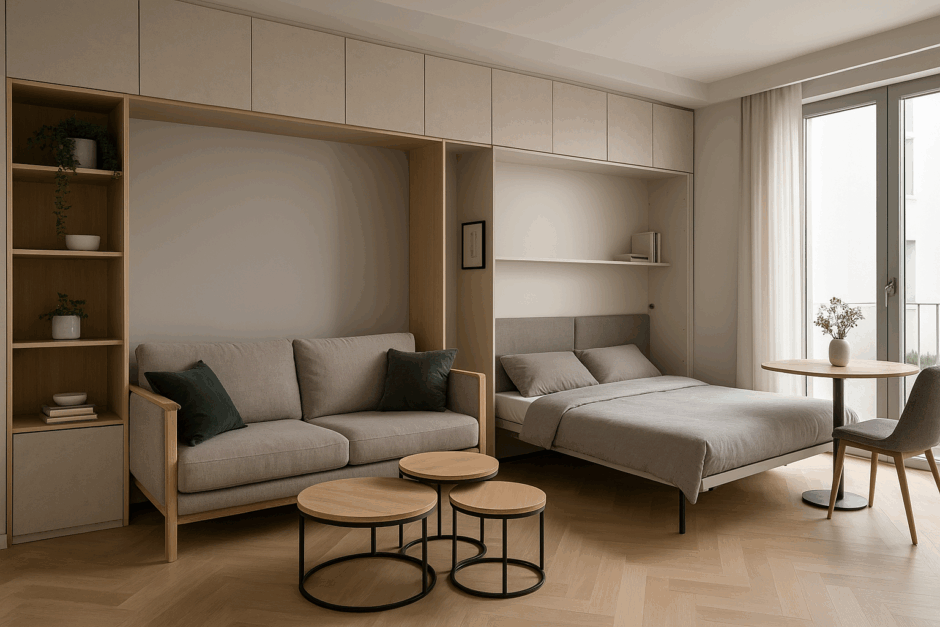
- Murphy Bed with Desk – A bed that folds up into the wall, often revealing a fold-down desk or table. This classic space-saver turns your bedroom into an office or living area by day.
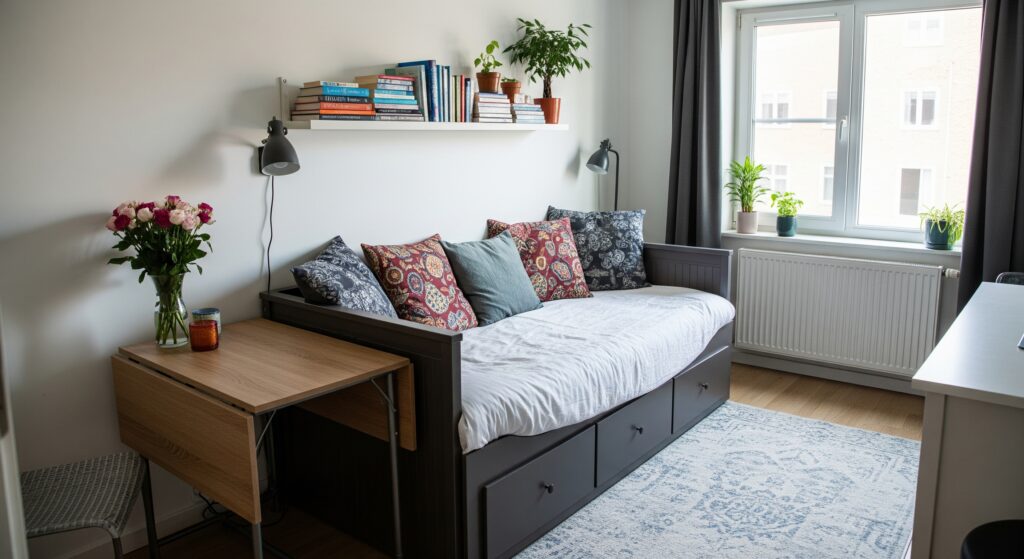
- Convertible Sofa Bed – A stylish couch by day that pulls out or folds down into a bed at night. Ideal for hosting guests without a dedicated guest room.
- Drop-Leaf or Expandable Table – A dining or work table that can compact to a smaller size (or fold flat against a wall) when not in use. Then extend when you need more surface area.
- Storage Ottoman or Bench – Seating that doubles as hidden storage, perfect for stashing away blankets, books, or other items. For example, an ottoman can be a footrest, coffee table, and a storage box all in one.
- Modular Shelving Units – Adjustable shelves or cabinets that can reconfigure into different shapes as needed. Even forming room dividers or desks. Many modular systems include fold-out tables or built-in desks for extra functionality.
These multifunctional pieces illustrate how clever design can make small interiors remarkably livable. In the sections below, we explore why such furniture is essential and highlight popular space-saving solutions across different regions. From the United States to Europe, Japan, and Australia.
Multifunctional Furniture For Tiny Homes (FAQ)
First, measure your space carefully. Look for pieces that fit the scale of your rooms (compact dimensions) and genuinely serve more than one purpose. High-quality hinges, durable materials, and easy conversion mechanisms are important. You want a sofa bed or folding table that one person can convert quickly. Prioritize items with built-in storage (like beds with drawers or coffee tables with shelves) to get extra value.
Also consider flexibility. Modular or wheeled furniture can be reconfigured or moved as needed, which is a big plus in a tiny home.
Reading customer reviews or watching demonstration videos can help ensure the piece is sturdy and functional in practice.
Finally, don’t forget to choose a style that complements your decor so that the item can blend into your space whether it’s being used in one mode or another.
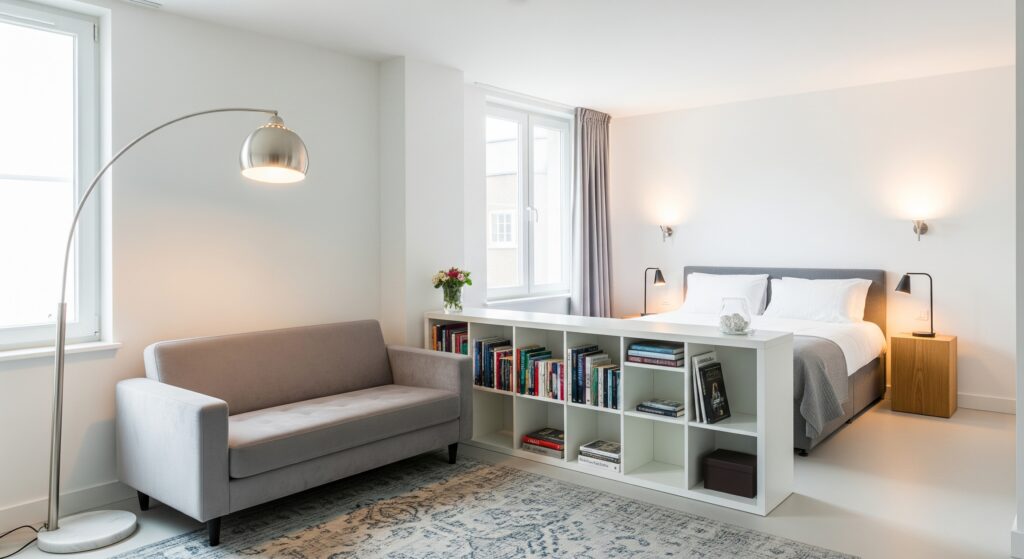
Multifunctional furniture and clever layout tricks can create the impression of distinct “zones” in a studio. One popular approach is to use a room divider that doubles as furniture.
For example, a bookshelf or a folding screen to separate the sleeping area from the living area. A sofa can also act as a divider between your “living room” and “bedroom.” Look for a Murphy bed or wall bed, which you can hide away during the day to reclaim space.
Rugs and lighting also help delineate areas. A pendant light over a small dining table defines the dining spot, while a floor lamp and rug in front of the sofa mark the lounge. Even in one open room. Arranging these zones thoughtfully, and using versatile furniture. This will make your studio feel like it has multiple rooms with different functions.
It depends on your budget and how unique your space requirements are. Ready-made multifunctional furniture has come a long way. There are many affordable, quality pieces (from big-box retailers to specialty brands) designed for small spaces. These can often meet your needs without the higher cost of custom work. However, in very tight or irregular spaces, custom-built furniture can be a game-changer.
Built-ins or bespoke pieces can use every inch perfectly. They also let you choose the materials and finishes to match your style. The downside is cost and time. Custom work is usually more expensive and you’ll have to wait for design and installation.
A middle ground some people use is hacking or modifying ready-made furniture. For instance, buying modular units and adding custom trim, or combining off-the-shelf components in a custom configuration.
In summary, you can absolutely create a great tiny home with off-the-shelf furniture. For certain situations (like a very small kitchen or an under-stair nook) a custom solution might be worth the investment.
The key is to integrate storage into other elements of the home so it’s not all visible. Use multifunctional furniture with hidden storage to tuck away items out of sight. Make use of vertical space. Install shelves or cabinets up high. Consider hanging storage like pegboards or over-the-door organizers for things like shoes, pots and pans, or toiletries.
In a tiny home, every niche can become storage. Steps, window sills, the space under a built-in bench. However, keep the visible areas as open as possible.
For instance, choose a few closed cabinets rather than open shelving so that clutter is behind doors. Maintaining a cohesive look (matching baskets or boxes) for any exposed storage helps it look tidy.
Regularly curating what you own is also important; in a small space, adopting a “one in, one out” rule for belongings can prevent clutter buildup.
By thoughtfully designing storage into your space, you’ll have a place for everything while keeping the overall vibe clean and airy.
There are many resources to find great multifunctional pieces. Big retailers like IKEA, Target, and Wayfair have sections or filters for small-space furniture. They offer everything from wall-mounted drop-leaf tables to compact sofa beds at various price points.
Specialty companies such as Resource Furniture or Clei (for high-end transforming furniture) showcase what’s possible if you’re willing to invest.
Online, you can browse communities and videos for inspiration. YouTube channels and Pinterest boards on “tiny homes” or “small space living” often feature ingenious furniture ideas (e.g., hidden compartments, DIY folding desks).
Visiting local furniture stores or home shows can also let you test out pieces in person.
And don’t overlook custom local craftsmen or DIY plans if you have a very specific need. The tiny house movement has spurred many woodworkers and builders to create custom solutions.
Lastly, check out blogs and magazines like Apartment Therapy, Dwell or Small Space Interiors which regularly highlight clever furniture designs and where to source them.
By exploring these outlets, you’ll discover a wide range of products that can help transform your small home. From budget-friendly finds to splurge-worthy designer pieces.
Why Tiny Homes Need Multifunctional Furniture
Tiny homes and micro-apartments come with unique challenges: minimal floor area, less storage, and often just one or two rooms to fulfill all your needs. Multifunctional furniture is essential in these spaces for several reasons:
- Maximizing Space: Each piece often replaces two or three separate furniture items, cutting clutter and freeing up room to move. For instance, a loft bed that sits above a desk or sofa creates usable space below, and a wall-mounted table that folds away leaves the floor clear when the table isn’t needed.
- Enhancing Versatility: Furniture that serves multiple purposes allows one area to flex for different activities. Your living room can turn into a bedroom or office simply by converting furniture arrangements. Versatile pieces adapt to your daily routine without requiring additional square footage.. Whether that’s working from home, entertaining, or relaxing.
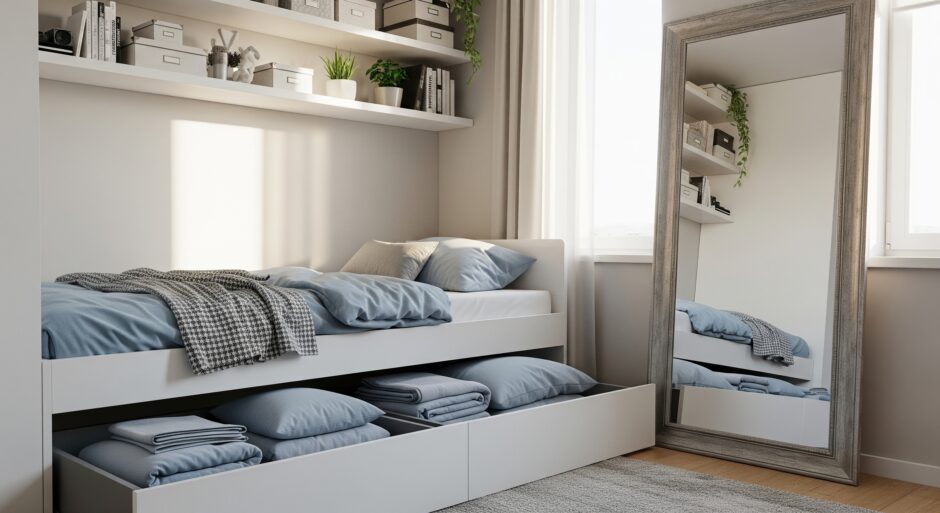
- Improving Organization: Many multi-use designs come with built-in storage (drawers, shelves, compartments), helping corral the chaos. By hiding storage within furniture. Like a bed with drawers underneath or a coffee table with shelves. Tiny home dwellers can keep belongings tidy and out of sight, making the space feel open and calm
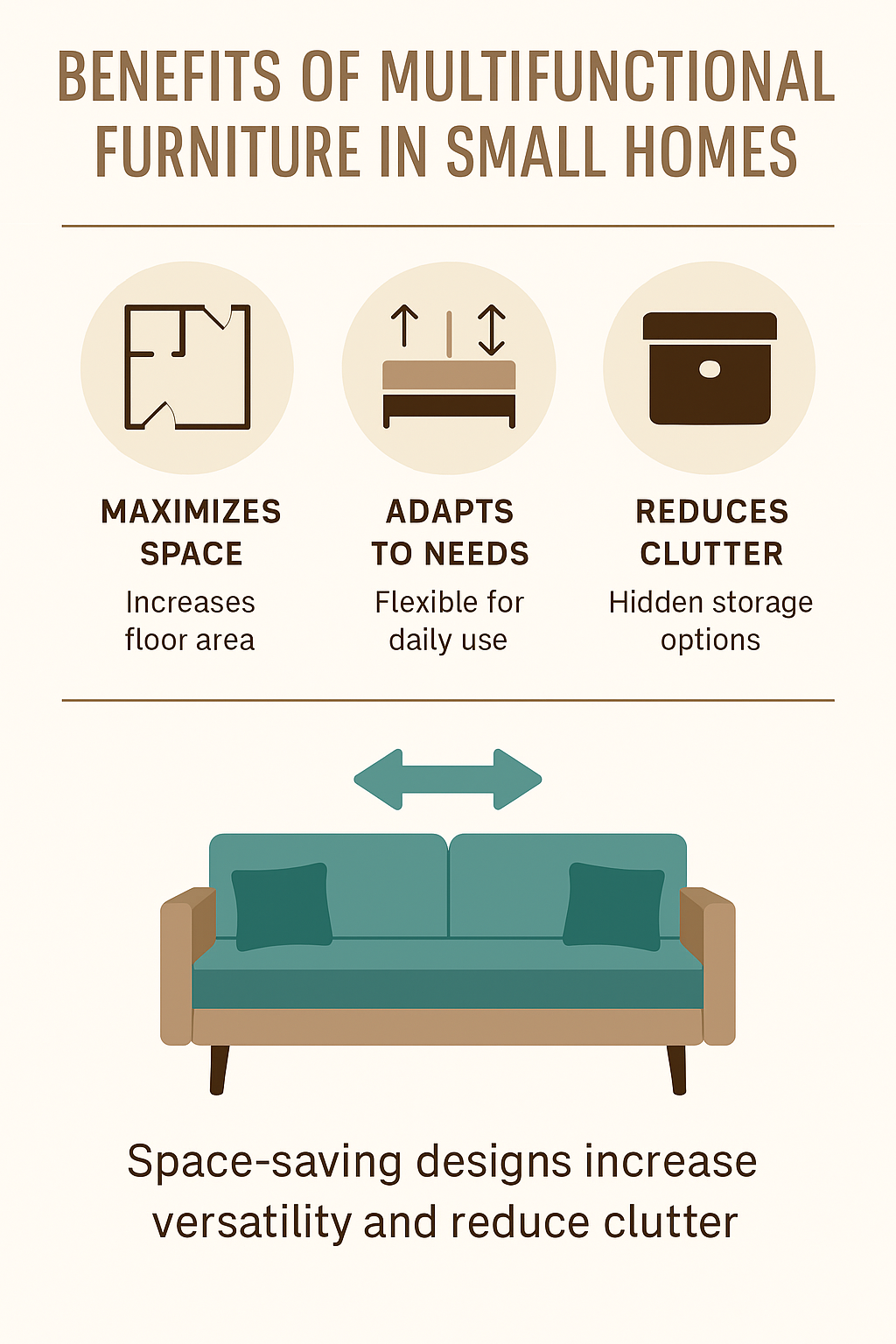
Multifunctional furniture brings major benefits to small homes: it maximizes floor space, adapts to different needs throughout the day, and often incorporates hidden storage for a cleaner, more organized living area. This infographic highlights how space-saving designs increase versatility and reduce clutter in compact living spaces.
By embracing these benefits, you turn limited space into an advantage – a catalyst for creativity and intentional living. Now, let’s take a tour of how different parts of the world approach multifunctional furniture in small homes and see examples of space-saving innovations from each region.
America: Tiny House Movement & Space-Saving Staples
The United States has seen a booming interest in tiny homes over the past decade. In fact, a recent survey found 86% of Americans would consider living in a tiny home, citing affordability and simplicity as big draws.
The resulting tiny house movement (which advocates living in homes often under 400 square feet) has fueled demand for innovative, space-saving furniture. American tiny house owners and small-space dwellers have popularized several multifunctional staples:
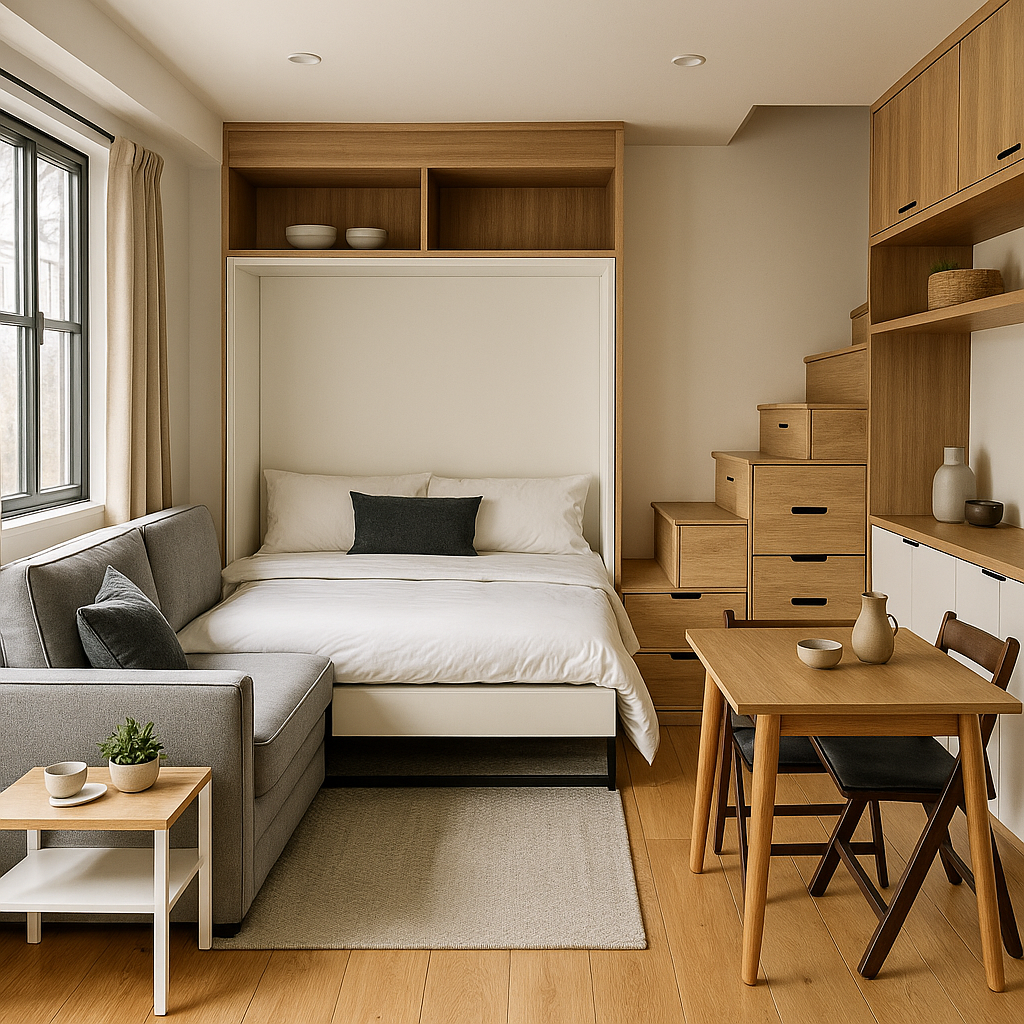
- Murphy Beds and Loft Beds: The classic Murphy bed has made a comeback in tiny houses and studio apartments. It folds up vertically into a wall cabinet when not in use, instantly freeing up floor space for daytime living. Modern Murphy beds often include built-in desks or sofas on the flip side. So one piece of furniture serves as both bedroom and office. Loft beds are another favorite. By elevating the bed, the area below becomes usable for a desk, seating, or storage. Effectively doubling the function of the same square footage.
- Sleeper Sofas and Sectionals: Americans love their living room lounges, so the sofa bed has become a tiny-home hero. A convertible sofa or futon provides comfortable seating by day and quickly transforms into a bed at night. Sectional sofas with detachable ottomans or chaise pieces offer hidden storage and flexible arrangements. You can reconfigure or tuck away sections as needed. This multi-purpose approach is great for studio apartments or one-room tiny homes that need to serve as living room and bedroom in one.
- Expandable Dining Tables: In many American tiny houses, you’ll find drop-leaf tables or pull-out dining tables that tuck into kitchen counters. These tables can often seat 4+ people when extended for meals or projects. Then fold down to a small console or completely disappear when not in use. Paired with stackable or folding chairs An expandable table ensures you’re ready for dinner guests or workspace. Without permanently sacrificing precious floor space.
- Storage-Integrated Furniture: From ottomans that hide board games and extra linens. To stairs with built-in drawers, U.S. tiny home designs frequently incorporate sneaky storage. For example, the steps up to a sleeping loft might each be a hinged lid or drawer for clothes and shoes. Coffee tables come with shelving or lift-tops to store items inside. This trend reflects a general principle in American tiny living. Every piece should pull its weight by offering storage or dual uses.
- Custom Built-Ins: Many U.S. tiny houses feature custom-built furniture that’s tailored to the exact dimensions of the space. Think of a built-in desk that folds out from a wall shelf or a window seat nook that doubles as a dresser. These bespoke solutions maximize every inch. While custom work can be pricey, it’s often worth it for the seamless functionality. Many DIY enthusiasts build their own. Brands and DIY shows in the U.S. often showcase transforming furniture inspiring homeowners to get creative with multipurpose design. From staircase drawers to beds that slide on tracks.
American small-space dwellers also benefit from a growing market of ready-made multifunctional furnishings. Major retailers offer space-saving furniture lines. Specialty companies like Resource Furniture bring European-designed transforming furniture (like Italian wall-bed systems) to U.S. customers. In short, the U.S. approach to tiny home furniture is a mix of reviving time-tested solutions (Murphy beds). Integrating technology and modern design, and prioritizing flexibility for the user. The result is that even a 300 sq ft tiny house can feel surprisingly comfortable and functional. Given the right furniture choices.
Europe: Smart Solutions for Small Apartment Living
Across Europe, living spaces have historically been smaller on average than in the U.S., especially in cities. European designers and homeowners have long mastered the art of compact, efficient living.
It’s common for city apartments in places like Paris, London, or Berlin. To be well under 600 square feet, so multifunctional furniture is practically a necessity rather than a trend. Several European innovations and habits showcase how to make the most of limited space:
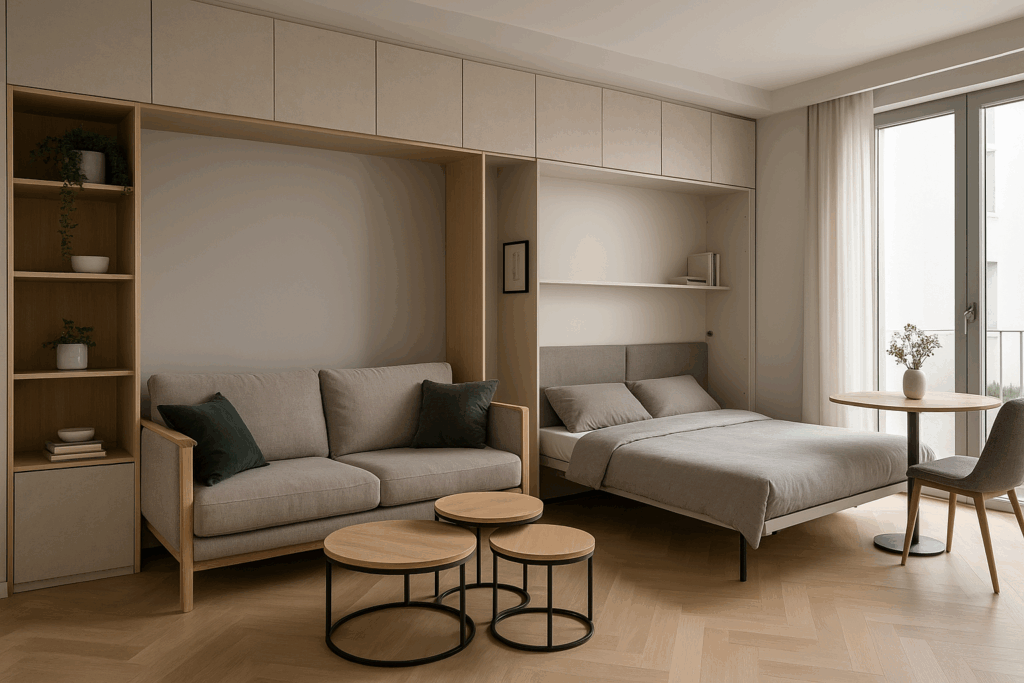
- Sofa Beds and Futons as Everyday Furniture: Europeans have widely embraced sofa beds not just for guests, but as primary beds in studio flats. Likewise, the futon serves as a bed at night and a minimalist couch when rolled or folded up during the day. In many European studios, you’ll find a day-to-night living area where the bedding is neatly stored each morning to free up the lounge. This daily practice of converting furniture helps one small room serve multiple purposes without feeling like a bedroom all day.
- Wall Beds and Modular Systems: High-quality transformable furniture systems are a hallmark of European design. For example, Italian manufacturers like Clei produce sleek wall-bed units that not only hide a bed behind cabinetry. But also integrate desks, shelving, or even a sofa on the front. These systems can turn a single room into a bedroom, office, and living room by rearranging the modular components. In urban apartments across Europe, you might see a dining table that slides under a raised platform or a bed that lifts up to reveal a workspace. Clever engineering that maximizes functionality.
- Built-In Kitchenettes and Compact Appliances: European kitchens in small flats often use miniaturized appliances and built-ins that save space. Fridges, dishwashers, and washer/dryer combos are available in narrower widths than the American standard. Allowing them to tuck into cabinetry seamlessly. Multi-use kitchen furniture, like a rolling island cart that doubles as a dining table or wall-mounted drop-down breakfast table. Are common solutions. These pieces make the kitchen adapt to need Extend for meal prep or dining, collapse for moving around in a tight space.
- Expandable and Nesting Furniture: European furniture brands have pioneered many nesting furniture designs. Nesting tables, a set of small tables that fit under one another. Are popular for providing extra surfaces for coffee or snacks when needed. Then consolidating into the footprint of one table. Expandable consoles are another European favorite, ideal for hosting dinner parties in a small flat. A console table by your entryway might extend into a 6-person dining table in minutes. All thanks to hidden leaves and support panels. Similarly, stackable chairs and stools are often kept on hand. You can stack and stow them in a corner, then bring them out for extra seating when friends visit.
- Use of Vertical Space: Europe’s older buildings often have high ceilings, which has led to creative vertical solutions. In small apartments, you’ll frequently see mezzanine lofts or elevated platforms added to create sleeping areas or storage up high. Even if a full loft isn’t possible, tall wardrobes, overhead cabinets, and ceiling-mounted storage racks make use of vertical volume. For furniture, this might include bunk-bed-style arrangements for adults. For example, a loft bed with a sofa or desk below. Essentially combining three pieces: bed + couch + desk in one vertical stack. By capitalizing on height, European interiors manage to fit more functionality per square foot on the ground.
- Modular Sofas and Sectionals: As with their American counterparts, Europeans enjoy modular sofas, but often on a smaller scale. Compact sectionals with movable ottomans or chaise pieces can be reconfigured to suit different occasions. A lounge setup for movie night, a more open arrangement for a party. Or even a guest bed by aligning sections together. European designs tend to emphasize slender profiles and lighter weight, making pieces easier to rearrange in tight quarters.
European interior design also leans toward minimalism and multi-use by tradition. In Scandinavian countries, there’s a concept of “lagom” which often translates into owning fewer, better items that serve many purposes. The influence of retailers like IKEA has spread affordable space-saving furniture worldwide. With staples like wall-mounted folding tables, sofa-beds, and storage stools appearing in homes from Amsterdam to Athens. In essence, Europe’s small-space solutions combine ingenious design with a lifestyle of making do with less. Proving that a well-furnished 500 sq ft flat can feel as rich and functional as a much larger home.
Japan: Innovative Designs for Micro Living
In Japan, especially in densely populated cities like Tokyo, compact living is a way of life. Japanese homes are typically modest in size, and single-room apartments can be extremely small. Sometimes well under 200 square feet.
Over decades, Japan has developed a culture of ultra-efficient design where furniture and rooms themselves are flexible to accommodate different activities. Multifunctionality is deeply embedded in traditional Japanese living and modern innovations alike:
- Futon Bedding and Transforming Rooms: A quintessential example is the Japanese futon. A lightweight, foldable mattress that is laid directly on the floor at night and stored away in a closet by day. This allows a bedroom to function as a living area or dining area once the futon is put away each morning. In a tiny Tokyo apartment, the same 8 tatami-mat rooms (about 140 square feet) might serve as living room, bedroom, and home office at different times of day simply by rolling up bedding and unfolding a low table. This practice reflects Japan’s traditional approach to multi-use spaces, where rooms are defined by their use rather than fixed furniture.
- Multi-Purpose Modular Units: Japanese designers are known for modular, space-saving furniture units that often combine several functions. For instance, you’ll find chic modern pieces like a compact sofa that converts into a bunk bed. Or an all-in-one kitchen unit that includes a mini-fridge, stovetop, sink, and storage in what looks like a single cabinet. Providing sleeping space for two without a dedicated bedroom. Some cutting-edge designs in Japan include robotic furniture. Such as motorized moving walls or ceilings that can lower a bed down at night and lift it out of the way during the day. These concepts are now being adapted globally in luxury micro-apartments.
- Foldable and Stowable Everything: If it can fold, flip, or tuck away, the Japanese have likely tried it in furniture. Folding dining tables and chairs are common in small homes. After use, they’re hung on a wall rack or slid under a bed. There are folding Japanese floor chairs with back support that can be easily stored when not needed for guests. Even bathtubs in some micro-apartments are designed to fold up or double as a countertop when covered. Although that’s more rare. This extreme commitment to stowable design means a tiny apartment can be cleared out to open floor space when needed. Then quickly re-equipped with furniture for meal times or sleeping. To do exercises or entertain, for example.
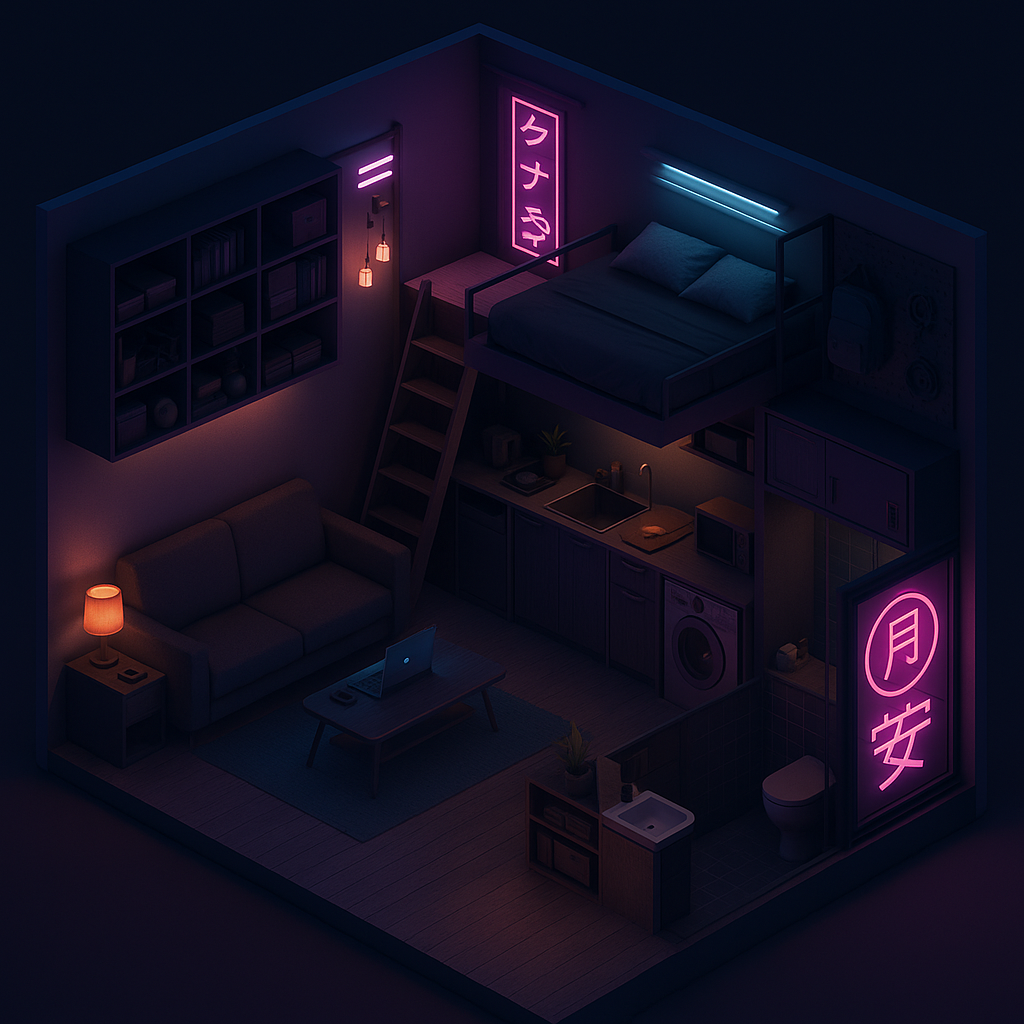
- Vertical Utilization and Lofting: Much like Europe, Japan makes heavy use of vertical space. High ceilings are less common in older Japanese apartments, but newer micro-housing often incorporates lofted sleeping areas accessible by ladder. Even a very small footprint can have a loft for sleeping or storage, freeing the main level for other uses. Wall-mounted storage is ubiquitous. Shelves, pegboards, and hanging racks cover the walls in many homes to keep belongings off the floor. A trademark in Japan is the use of pegboard walls in kitchens and even living areas. Allowing residents to re-hang and rearrange storage for different items seasonally. For instance, hanging fans and fold-up guest bedding bags in the summer, coats and heaters in the winter.
- Custom Joinery and Built-Ins: Japanese carpentry traditions have contributed to modern built-in solutions that are both beautiful and functional. Examples include genkan (entryway) shoe cabinets that hold an entire household’s footwear in a slim case. Or tatami platforms with integrated storage. Some studio apartments feature a raised tatami floor section under which drawers or even a trundle bed can be pulled out. Custom-designed units might combine steps, storage, and seating. One famous design concept from Japan is the “cupboard apartment”. Where a small loft bed is built above and a series of cupboards and a desk fit below it. Essentially one large built-in piece that covers an entire wall and fulfills all main furniture needs in a micro apartment.
Japan’s approach to multifunctional furniture often blurs the line between furniture and architecture. The result is a living space that can completely change appearance and function throughout the day. While not everyone will take it to the extreme of a 90-square-foot micro-flat, even larger Japanese homes utilize these principles. Sliding screens to close off or open up rooms, low furniture that makes spaces feel larger, and a “less is more” aesthetic.
For tiny home enthusiasts worldwide, Japanese design offers inspiring examples of how innovation can make even the smallest home comfortable, through cleverly designed furniture that bends to its user’s needs.
Australia: Multifunctional Furniture Trends Down Under
In Australia, the housing landscape has traditionally featured larger homes, but urbanization and a focus on sustainability have brought small-space living into focus here as well. Cities like Sydney and Melbourne have seen a rise in micro-apartments and laneway houses, where efficient use of space is paramount.
Additionally, Australia’s growing interest in tiny houses on wheels for sustainable, off-grid living has paralleled the global tiny house movement. Aussies, known for their innovative spirit, have embraced multifunctional furniture with a modern, stylish twist:
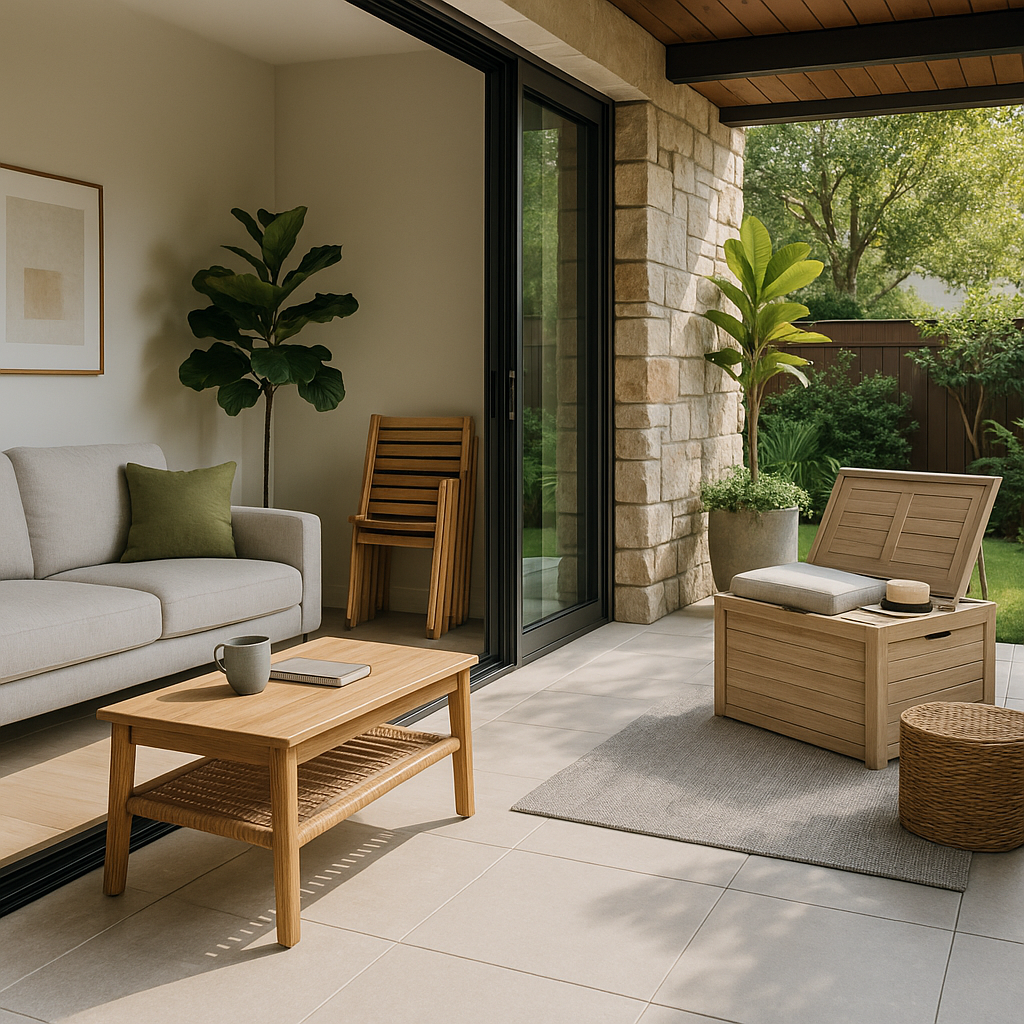
- Indoor-Outdoor Flexible Furniture: A unique aspect in many Australian homes is the blending of indoor and outdoor living spaces. Folding or sliding glass doors often open small interiors to a patio or deck, effectively extending the living area. Multifunctional furniture plays into this by using pieces that can serve indoors and outdoors. For example, a set of stackable outdoor chairs might double as extra dining seating inside. A storage bench on the patio can hold cushions and also work as a coffee table or extra indoor seating when pulled in. This flexibility lets tiny homes capitalize on good weather and merge their interior with nature, a hallmark of Australian living.
- Space-Saving Bed Designs: Australian designers have introduced various bed innovations for small spaces. Besides the ubiquitous sofa beds and Murphy beds, there’s a trend of elevated platform beds in studio apartments. Essentially building a bed frame with significant storage or even an entire wardrobe underneath. Some tiny house builders in Australia incorporate bed lifts, where a bed on a pulley system can be raised to the ceiling when not in use and lowered at night. Additionally, trundle beds and bunk beds are used creatively. A sofa or bench with a pull-out trundle can provide a second bed for guests. Bunk beds aren’t just for kids. They allow two adults to sleep in a footprint only slightly larger than a twin bed. This is great for hosting friends in a tiny home or maximizing a small guest room.
- Modular and Flat-Pack Furniture: Given Australia’s distance from other major manufacturing hubs, shipping large furniture can be costly. This has made flat-pack and modular furniture especially popular. Companies offer pieces that can be easily assembled in tight spaces or configured in various ways. One can find modular shelving that turns into a desk, or flat-pack sofa kits that include built-in storage compartments. The beauty of modular setups is that they can change with the homeowner’s needs. Australians might reconfigure a modular lounge into an L-shape when moving to a new apartment, or add extra modules if the space allows. Brands like Globewest produce designer compact sofas and tables that marry style with small proportions. Showing that you don’t have to sacrifice aesthetics for practicality.
- Murphy Desks and Wall Furniture: Home offices have become more common in small Australian homes. Leading to creative Murphy desks and wall-mounted workstations. These are fold-down desks that mount to a wall or inside a cabinet and can be closed up when the workday is over. Blending back into the living space. Some designs include chalk boards or art on the underside of the desk. So when it’s folded up it actually serves as wall décor. Likewise, wall-mounted folding ironing boards, laundry drying racks, and even fold-out ironing cabinets. Are used to save space in utility areas. Australians living tiny appreciate when even the chores can be accommodated without dedicated rooms.
- Built-In Seating and Custom Storage: In many Australian tiny houses, you’ll see built-in benches with storage under the seat. This not only saves space by tightly fitting the dimensions of the house. It also secures the furniture for homes on wheels that may move. The storage bench becomes a sofa with some cushions and inside it might hold anything from kitchen pantry overflow to clothes. Australian tiny home builders also frequently include stairs that double as cabinets. And multi-purpose lofts that can serve as both storage and a cozy reading nook or guest sleeping area. The design philosophy often emphasizes quality over quantity. Having a few multi-use pieces crafted to fit the space, rather than many small, separate furniture items. This results in an uncluttered look that aligns with the modern Australian interior style. Which tends to be clean, bright, and open, even in a very small home.
Australian interiors for tiny living combine ideas borrowed from around the world all adapted to the Australian lifestyle and climate. You’ll find Japanese-inspired sliding screens, European-style sofa beds, and American-invented Murphy beds.
Whether it’s a chic micro-apartment in Melbourne or an off-grid tiny cabin in the outback. The best multifunctional furniture in Australia emphasizes durability and ease of use. Matching the laid-back yet resourceful Australian way of life. Space-saving doesn’t mean skimping on comfort. A well-chosen few pieces can make a small Aussie home feel welcoming and complete, ready for work, rest, and play.
Multifunctional Furniture for Tiny Homes Conclusion
Multifunctional furniture proves that limited space doesn’t have to limit your lifestyle. By carefully selecting pieces that adapt and serve many purposes, a tiny home can feel open, organized, and welcoming. Whether you’re embracing van life or outfitting a micro-apartment in the city. These smart furniture choices empower you to live big in a small home. And remember, maximizing your space isn’t just about furniture. Maximizing Natural Light in Small Interior Spaces can also make a huge difference in how open and airy your tiny home feels. By combining bright, light-filled design with clever furniture, even the smallest of homes can shine. Maximizing Natural Light in Small Interior Spaces.