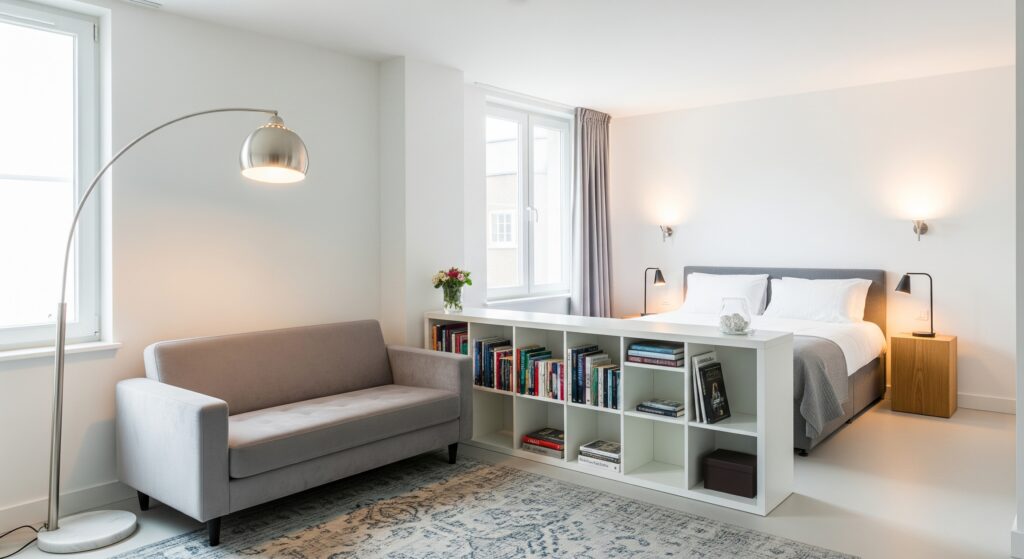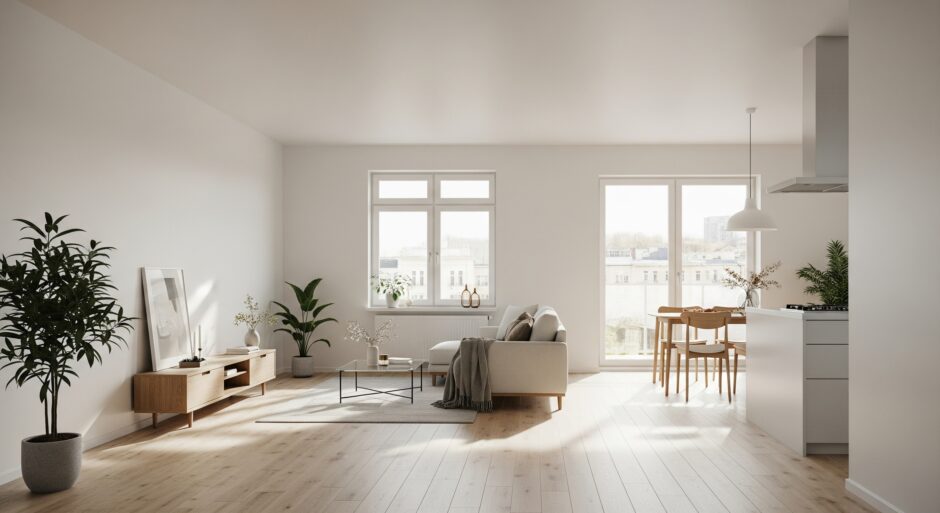
Imagine stepping into your city apartment and feeling immediately uplifted by a flood of natural light. In cramped urban living, sunshine can be a game-changer. It makes a small space feel open, warm, and inviting. Beyond just aesthetics, sunlight is scientifically proven to boost our mood and productivity.
Unfortunately, many small apartments have limited windows or views of brick walls, leaving rooms dim and dreary. The good news? With a few clever design tweaks and lighting tricks, even the tiniest apartment can feel brighter and more spacious.
This guide will walk you through maximizing natural light in a small apartment. From smart interior design choices to creative lighting solutions (including LED options for after dark). Let’s transform your cozy nook into a sun-kissed retreat, no renovation required!
FAQs of Maximizing Natural Light in a Small Apartment
How do you brighten a small apartment that has no direct sunlight?
Even if your apartment lacks direct sun, you can brighten it by using reflective décor and smart lighting. Use mirrors to bounce light from any source around the room. Decorate with light colors to maximize any available light. Also, use daylight-mimicking LED bulbs in multiple lamps to simulate natural light. Placing them near windows or corners can create the illusion of daylight where there is none.
What type of lighting is best for a small space?
A small space benefits from a layered lighting approach. This means combining ambient lighting with task lighting and accent lighting. Using bright, daylight-toned LED bulbs for ambient lighting keeps the space feeling open, while warmer accent lights can make it cozy. The mix prevents harsh shadows and spreads light evenly, making the room feel larger.
Can mirrors increase the natural light in a small apartment?
Yes, mirrors are one of the easiest ways to amplify natural light. By placing a mirror opposite a window or light source, it reflects incoming light back into the room. This effectively doubles the reach of that light. Even positioning mirrors on adjacent walls to a window helps distribute light and reduce shadows. In small or dark rooms, a well-placed large mirror can make a dramatic difference in brightness and the feeling of space.
Why are my white walls still making the room look dull?
White or light-colored walls help, but if they’re looking dull it could be due to lighting and finishes. First, ensure your light sources are adequate. You might need brighter bulbs or additional lamps to avoid gloomy areas. Secondly, the paint finish matters. Flat matte paint won’t reflect as much light as an eggshell or satin finish. Lastly, consider what’s on your white walls. Heavy artwork or dark shelves can counteract the brightness. Keep walls relatively uncluttered or use mirrors and metallic accents to enhance the light reflection.
What are daylight bulbs and should I use them?
Daylight bulbs are LED or CFL light bulbs that emit a bright, white light similar in color to natural midday sun (typically around 5000–6500K on the color temperature scale). They are great for brightening up a space and keeping colors in your decor looking true. In a small or dim apartment, using daylight bulbs in your main fixtures can make the room appear more open and lively, especially during daytime hours or in spaces with little natural sun. You might use warmer-toned bulbs in cozier areas like the bedroom, but daylight bulbs are excellent for kitchens, home offices, or anywhere you want a crisp, energetic feel.
Why Natural Light Matters in a Small Apartment
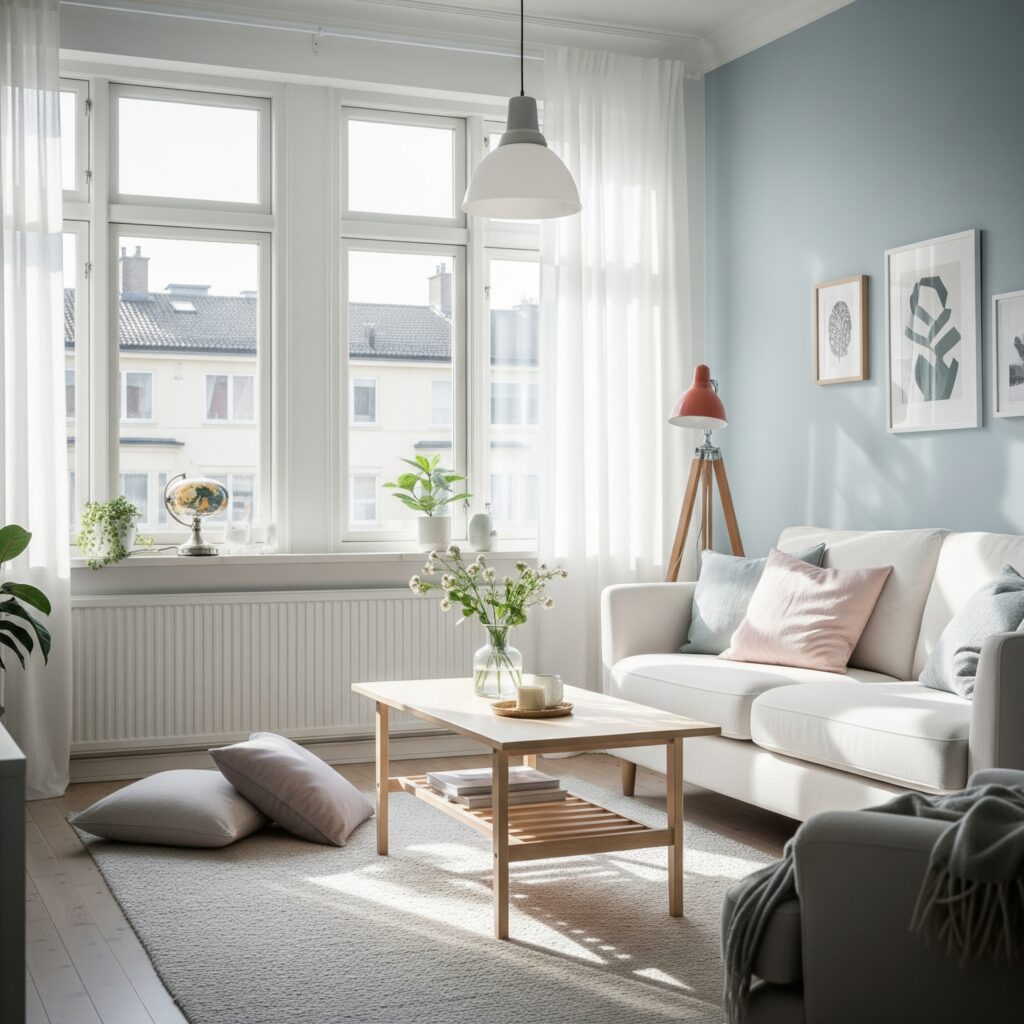
Natural light isn’t just a luxury. It’s essential for comfortable, healthy living, especially in tight urban quarters. Sunlight can make a small room appear larger by erasing harsh shadows and defining depth. Designers often say light is the best décor. It adds vibrancy and life to what might otherwise feel like a claustrophobic box.
On a practical level, more daylight means less dependence on lamps during daytime. Which can save energy (and lower your electric bill) while also being eco-friendly. And let’s not forget the psychological perks. A sunlit home simply feels happier.
Studies link exposure to natural light with improved mood and even better sleep cycles. Since sunlight helps regulate our circadian rhythm. In a small apartment that might double as your workspace, living area, and everything in between, these benefits are amplified. Bright, natural light can make you more productive and relaxed, turning a tiny apartment into a welcoming sanctuary.
In short, maximizing natural light can trick the eye (and brain) into experiencing a small interior as open, airy, and energizing. With that in mind, let’s explore how to invite more sunshine into your space and make every square foot count.
Keep Windows Clear and Your Layout Open
One of the simplest yet most impactful changes you can make is to liberate your windows. In many urban apartments, windows are few and small. So it’s critical to let every ray of light through.
Start by evaluating what might be blocking your windows. Heavy drapes, bulky furniture, or even tall houseplants can significantly cut down the light reaching the rest of the room. Interior designer Emma Corner advises rearranging furnishings to avoid obstructing windows and to pull furniture away from window areas. Opting for low-profile pieces that won’t create dark corners. The goal is to have an unobstructed path for sunlight to travel deep into the room.
- Ditch Heavy Curtains: Swap out thick, dark curtains for sheer drapes or even go curtain-free if privacy isn’t a concern. Light-colored sheer curtains allow sunlight to filter in while still offering some privacy.
Hanging drapes high and wide (well above and beyond the window frame) can make windows look larger and ensure that when they’re open.
If you need privacy or light control. Consider dual-layer solutions. For example, sheer blinds behind heavier curtains that you only draw at night. This way you have maximum light during the day and coverage when needed.
- Thoughtful Furniture Placement: Re-think your room layout with light in mind. Ideally, you should be able to see the entire window from most of the room. If a bookcase or sofa is in front of part of the window, try moving it to another wall.
Place taller, bulkier items against the darkest wall in the room, not next to windows. Use lower-profile sofas, benches or open shelving near windows instead of high-back couches or armor. This ensures nothing is looming between your light source and the rest of the space.
Even small adjustments, can help light flow better. Like pushing a table a few inches away or swapping a solid coffee table for a glass one.
- Keep Windows and Screens Clean: It sounds obvious, but a dirty window can block a surprising amount of sunlight. Dust, grime, or old streaks act like a filter, diffusing and dimming the light that passes through.
Make it a habit to clean your windows at least monthly on the inside (and ask your super or landlord about cleaning the exteriors annually). Think of it like cleaning a pair of glasses. Suddenly everything is clearer and brighter. You’ll be amazed how much more cheerful your rooms look after a good window washing!
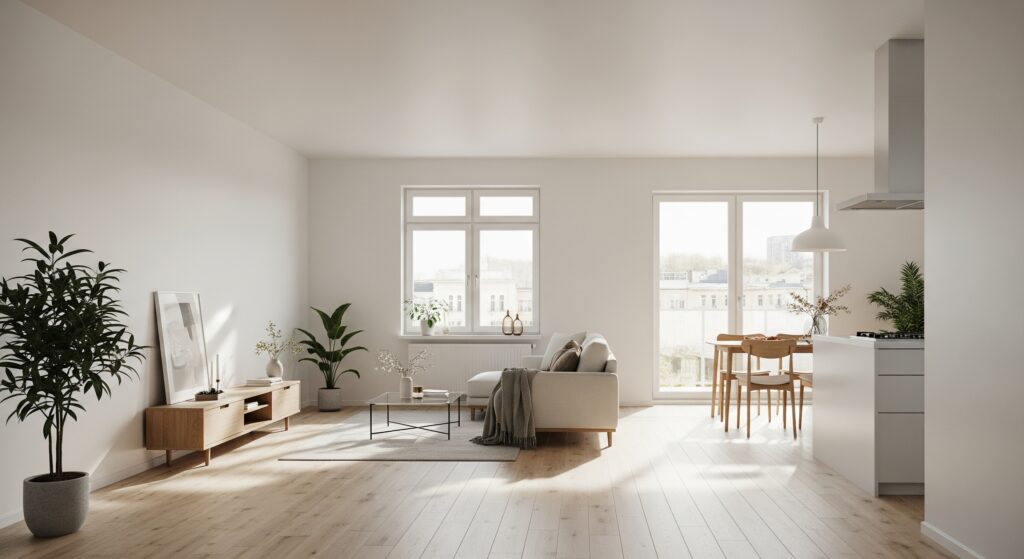
By keeping window areas clear and designing your layout around light, you create the foundation for a brighter apartment. The key is to think of light as a feature of your layout. Just as you’d arrange for flow or focal points, arrange for sunshine. An open, light-friendly layout coupled with bare or sheer-dressed windows will set the stage for all the other strategies to shine (literally).
Amplify Daylight with Reflective Surfaces
Once you’ve maximized the light coming in, the next step is to spread it around. This is where reflective surfaces become your small apartment’s best friend. Mirrors, glass, and metallic finishes can act like mini “light multipliers,” bouncing rays to reach areas that the sun would otherwise miss. Interior experts often use this trick in narrow or dark spaces, and it works wonders.
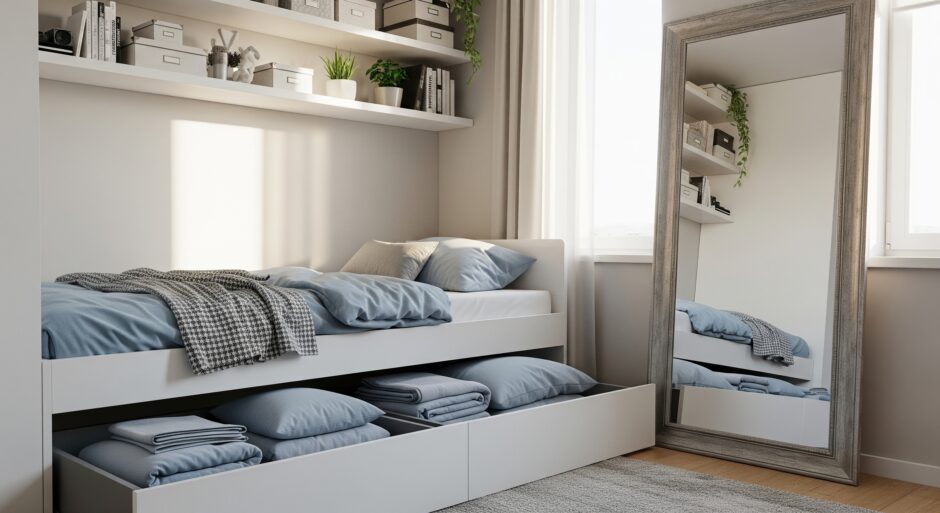
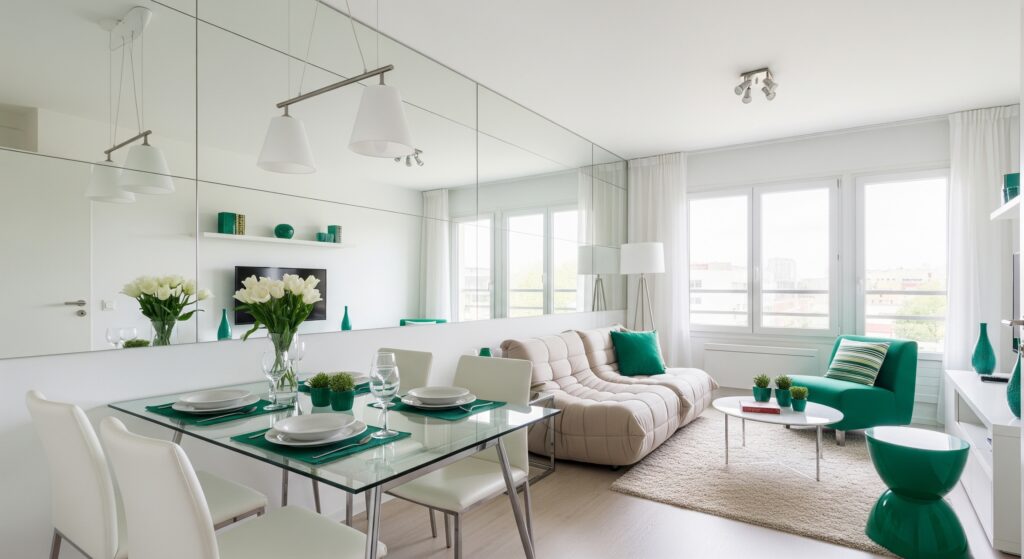
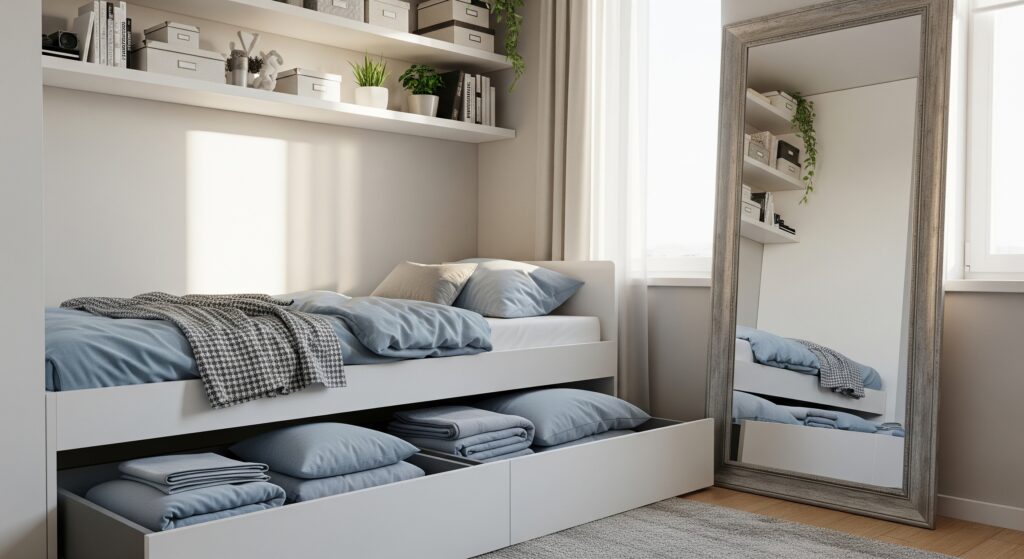
- Strategic Mirror Placement: A well-placed mirror can double the impact of a single window. For instance, hanging a large mirror directly across from or adjacent to a window reflects light back into the room. Effectively brightening areas that are shadowed.
In fact, mirrors and other shiny surfaces can “double, or even triple the reach of your natural light” by dispersing it throughout the space.
Consider a big statement mirror on a wall opposite your light source, or multiple smaller mirrors arranged to catch incoming sun from different angles. However, avoid placing a mirror exactly facing a window where it beams sunlight straight back out or causes glare. Angle it slightly or position it to reflect onto a darker wall or corner.
Pro tip: mirrored or glossy furniture (like a glass coffee table or a shiny console) can also help bounce light around while serving a function.
- Light Colors and Finishes: Think of your apartment’s surfaces as a canvas for light. Dark, matte surfaces tend to absorb light, whereas light-colored, glossy surfaces reflect it.
Painting your walls and ceilings in bright neutrals (classic white, soft off-white, or very light pastel hues). Will make a huge difference in how light your room feels. Soft whites and pale colors reflect a lot more of the light that hits them, unlike deep colors that soak it up.
Pay special attention to your ceiling. A white or near-white ceiling is ideal, as it bounces light downwards (plus, it makes the ceiling feel higher). If you’re not up for repainting, focus on décor: choose light-colored furniture upholstery, rugs, and curtains. Even swapping a dark blue rug for a beige or cream one can brighten the floor. Which often gets a significant share of the light.
For finishes, consider a bit of shine. You don’t need to make everything reflective (too much gloss can be overwhelming and show imperfections). But semi-gloss or satin paints on trim and even walls can subtly reflect more light than flat matte paint. Add in some metallic or glass décor. Like a brass lamp, chrome stool, or a glass vase. Which can glint and gleam when sunlight hits, further spreading illumination.
As Wendy Rose Gould wrote in Martha Stewart Living, lighter colors and reflective finishes help rooms feel more airy, while shinier paints bounce light for a sunnier vibe. The idea is to create a feedback loop. Daylight enters, hits a mirror or light object, bounces to another surface, and reaches deeper into your apartment.
By using reflection and color wisely, you amplify every ray of sun that enters your home. Even a single small window can seem to produce much more light if that light is ricocheting off mirror glass and bright walls. If you implement these tips, you might find you no longer need to turn on overhead lights until much later in the evening because your apartment stays naturally bright.
Layer Artificial Lighting for Evening & Low-Light Hours
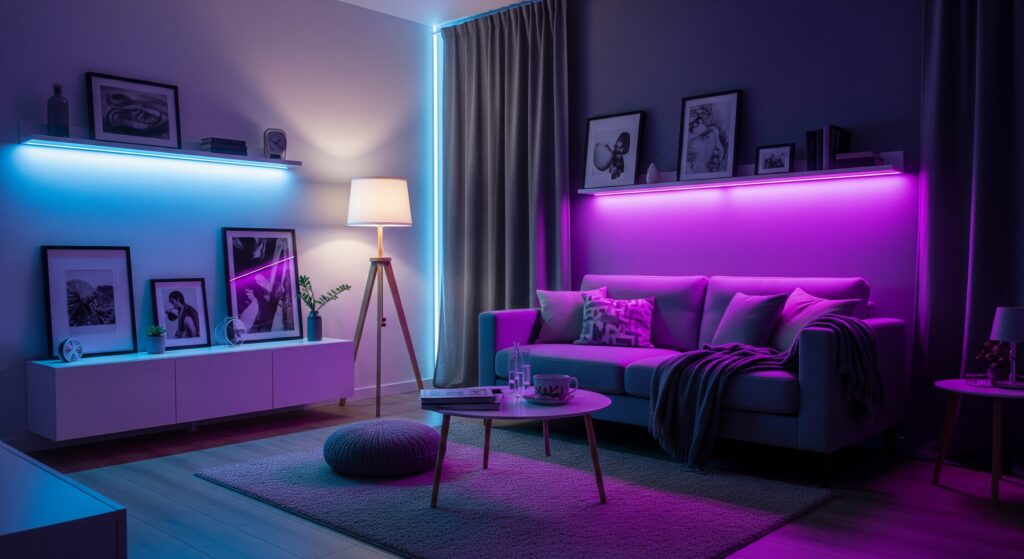
Even with all the daylight hacks, there will still be times (especially at night or on gloomy days) when you need artificial lighting.
The key in a small space is to layer your lighting rather than relying on a single harsh overhead lamp. A mix of ambient, task, and accent lighting will fill your apartment with a warm, even glow that complements the natural light you do get.
- Ambient, Task, and Accent Lights: These are the three types of lighting designers recommend blending in any room. Ambient lighting is your general illumination. Often an overhead ceiling light or a bright floor lamp. That provides the base layer of light.
Task lighting is more focused (think desk lamp, reading lamp by the sofa, under-cabinet lights in the kitchen) for specific activities.
Accent lighting includes things like wall sconces, string lights, or small lamps that add depth and coziness but aren’t primarily for seeing tasks. In a small apartment, you actually need all three in different corners to avoid leaving any area in shadow. Relying only on one ceiling fixture can leave the corners dark and the vibe flat.
Instead, distribute a few light sources around the room at different heights. For example, you might have a floor lamp in one corner, a table lamp on a side table, and an LED strip tucked behind your TV or along a shelf.
By having 2–3 light sources in each room, you can adjust for mood and function. Ensuring no spot feels cave-like.
Better Homes & Gardens suggests that blending these lighting types will “preserve that fresh, open feeling of natural light Even after the sun has set,” giving you options for any time of day. The result is a space that always feels inviting – bright when you need it, soft when you want it.
- Use Daylight-Toned LED Bulbs: Not all light bulbs are created equal. To mimic a sunshine vibe, pay attention to the color temperature of your bulbs. Look for LED bulbs labeled “daylight” or around 5000K (Kelvin) color temperature. These emit a clean, white light similar to daylight, which can make your small apartment feel open and energetic.
On the other hand, traditional warm bulbs (~2700K, with a yellow glow) are cozy for evenings but can make a small space feel a bit dim or enclosed if used exclusively.
A good strategy is to use daylight bulbs in areas where you spend daytime and use warmer bulbs in lamps you turn on at night for relaxation.
Additionally, LEDs are ideal for small apartments because they run cool (no overheating your space) and are energy-efficient. Brightness matters too. Go for bulbs with higher lumens (800+ lumens, equivalent to 60W or higher incandescent) to ensure sufficient light output.
In short, bright white LED bulbs can simulate missing sunlight when nature isn’t providing it.
- Smart Lighting & Mood Setting: To truly optimize your lighting, consider smart LED solutions. Modern LED strips and smart bulbs (like those from Govee or Philips Hue) allow you to adjust brightness and even color tone throughout the day.
For instance, you can have a cool white light in the morning to help you wake up and switch to a soft warm glow at night to wind down, all in the same lamp.
Some LED light strips can be hidden along the top of cabinets or behind furniture to uplight your walls or ceiling. Which makes the room feel taller and more open. Imagine a subtle glow washing your ceiling. It erases shadows in upper corners and adds a sophisticated ambience.
You can also program smart lights to gradually brighten in the morning (simulating a sunrise in your windowless bedroom). Or dim in the evening. This not only sets the mood but also supports your natural sleep cycle.
As one lighting blogger described, layering lights with smart controls gave the room multiple “moods”. Bright for productivity, and dim and cozy for relaxing. Transforming how the space felt at different times.
In a tiny apartment, having that flexibility is a game-changer. Your living room can become a productive home office by day and a calming retreat by night. Just with the right lighting adjustments.
Remember, artificial lighting is the supplement to natural light, not the enemy. By thoughtfully layering and choosing the right bulbs, you ensure your apartment is well-lit 24/7. No more corner-of-shame that never sees light. And no more single glaring bulb casting harsh shadows. Instead, you’ll have a balanced lighting design that makes the most of daytime sun and seamlessly takes over after dusk. All while maintaining the airy atmosphere you’ve worked so hard to create.
Common Mistakes to Avoid in Small Spaces
While implementing the above strategies, beware of a few common pitfalls that can inadvertently keep your apartment looking dim or cramped. Avoiding these mistakes will ensure all your efforts to increase light aren’t in vain:
- Heavy, Opaque Window Treatments: Thick blackout curtains or dark blinds can nullify all the natural light in a small apartment during the day. If you must have them , remember to open them fully each morning.
A better approach is layering a blackout roller shade (for night) with sheer curtains. Or use bottom-up shades that let light in from the top of the window while preserving privacy below. Never leave heavy drapes partially closed all day; it’s a guaranteed way to waste good sunlight.
- Dark, Matte Surfaces Overload: An accent wall in navy blue or a big black sofa can be dramatic, but in a tiny space it might drink up the light. One dark piece is fine, but balance it with plenty of light around it (throw blankets, cushions, art, etc.).
Avoid painting ceilings or large sections of walls in dark colors. And if you have dark wood floors, use a light-colored rug to help bounce light upward. Essentially, don’t create a “cave” effect with too many dark surfaces.
- Clutter and Tall Furniture Near Windows: Piling up decor, storage boxes, or tall bookshelves right next to your windows is a big no-no. Clutter not only blocks light physically but also visually makes a space feel cramped and darker.
Keep window sills minimal. And if you have a massive shelf unit or wardrobe and nowhere else to put it. At least position it perpendicular to the window wall, not flat against it covering the glass. The more open the area around your windows, the better the light distribution.
- Relying on a Single Light Source: We mentioned this in the lighting section, but it bears repeating as a “mistake to avoid.” Using only one overhead light and nothing else will leave your apartment full of gloom and shadows in the corners. It’s also harsh on the eyes.
Spread out your lighting; even a couple of plug-in wall sconces or LED puck lights in shelves can make a difference if adding lamps is challenging. Don’t forget spots like corridors or closets. A dark entryway that opens into your living area can visually suck light away. A bright LED in the entry or a battery-powered puck light in a closet can eliminate those black holes.
- Neglecting Maintenance: Over time, light fixtures and bulbs themselves can get dusty or dim (some LEDs and fluorescents lose brightness). Clean your light fixtures and replace bulbs that are getting old. And always fix any non-working lights. A burned-out bulb in a multi-light fixture not only reduces light, it also draws the eye and makes the space feel a bit uncared for.
By sidestepping these common errors, you’ll ensure your small apartment lighting strategy is foolproof. Think of it as removing barriers, both literal and figurative, to a bright and cheerful home. Now, with mistakes out of the way, you can fully enjoy the luminous little oasis you’ve created.
Embrace a Brighter, Cozier Apartment (Conclusion)
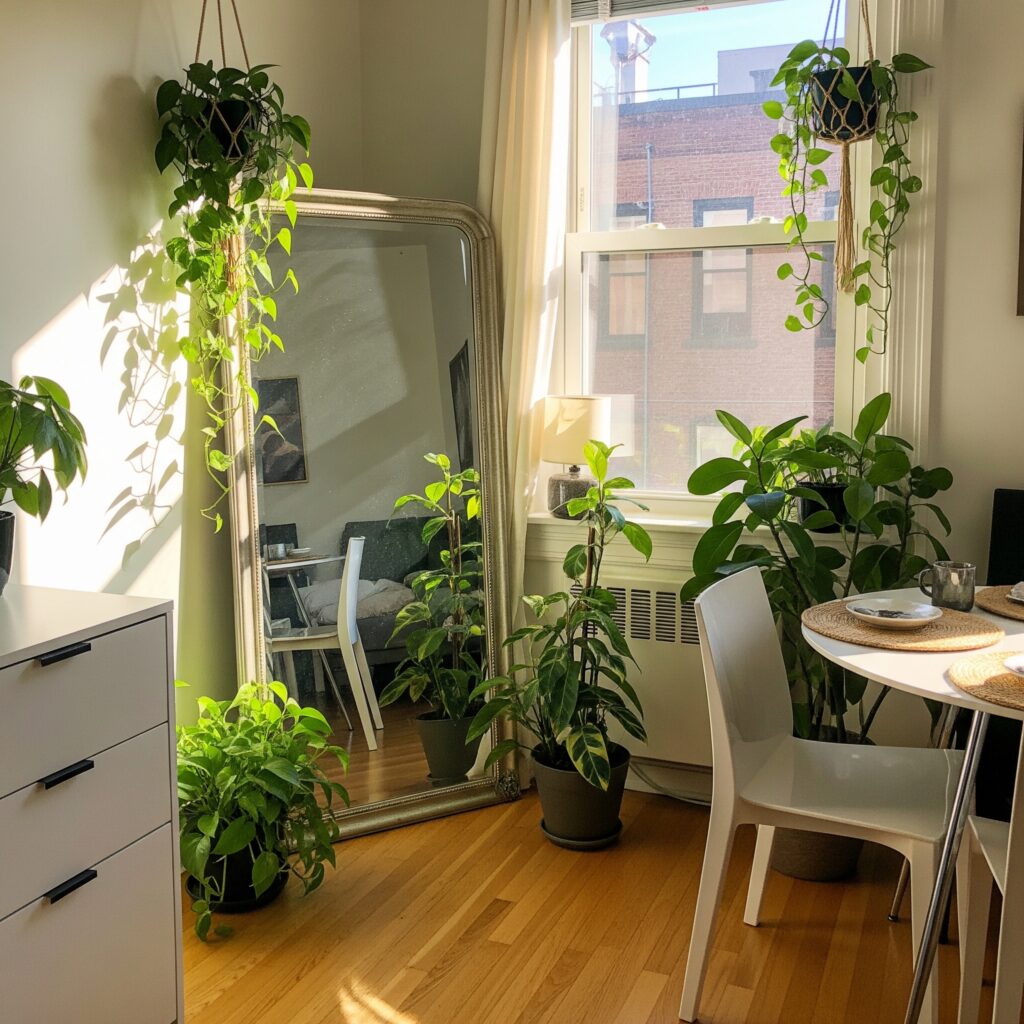
Living in a small urban apartment doesn’t mean you’re destined to live in the dark. With a blend of smart décor decisions and lighting know-how. Even the tiniest interior can feel open, airy, and full of life.
You’ve learned how simple swaps, like using mirrors, lighter colors, and sheer curtains, can dramatically amplify the daylight you have. You’ve rearranged and decluttered to give sunshine an unobstructed path. And when the natural light in your small apartment isn’t enough. You’ve added layers of warm, welcoming illumination. Bright daylight LEDs to banish shadows and soft accent lights to set the mood when the sun goes down.
The impact of these changes is not only visible in the aesthetic of your space but also tangible in how you feel at home. Morning rays streaming across a light-colored rug can make your coffee ritual feel more pleasant. A mirror catching the last daylight in the evening can extend that golden-hour glow just a bit longer. And later, when you switch on a few well-placed lamps, your apartment transforms into a cozy retreat with no dreary corners in sight.
By maximizing the natural light in a small apartment, thoughtfully supplementing with artificial light. You’re doing more than just decorating. You’re improving your quality of life in a small space. Your apartment will feel larger, your spirits lighter.
So throw open those curtains, adjust that lamp, and bask in your brightly lit haven. A sunnier, happier home is well within reach, and you’ve got all the tools to achieve it.
If you’re ready to take your bright, airy apartment to the next level. Explore our guide, 10 Brilliant Design Hacks for Small Apartments. From multifunctional furniture to clever storage solutions. These tips work beautifully alongside improving natural light in a small apartment strategies. Creating spaces that feel larger, more functional, and perfectly tailored to city living.
Just as lighting can brighten and open up a small room, choosing the right furniture can dramatically improve functionality in tight quarters. If you’re looking for ways to further optimize a compact home, our latest guide on the Best Multifunctional Furniture for Tiny Homes is a must-read. It explores innovative furniture that serves dual purposes – from beds that turn into desks to tables with hidden storage – all designed to make the most of limited space. By combining smart lighting strategies and space-saving furniture, you’ll create an interior that not only feels larger and brighter but also adapts effortlessly to your needs. Be sure to check out the furniture guide to transform your small interior into a truly versatile and comfortable living space.